


I drove a Veyron. This isn’t breaking news for you. It certainly wasn’t news to me, despite spending years lamenting that I missed the era, except for my circle of friends who actually care that I drove a hypercar down the Pacific Coast Highway in Newport Beach. What is news is what Bugatti is doing with old iron.
They launched a configurator for owners who already own a Veyron or bought one on the secondary market. You want to change the paint? The interior? Maybe fix a regretful factory choice from fifteen years ago. Go ahead.
It’s a fascinating look at ultra-low-volume luxury. A fantasy tool for those of us who will never specc a Tourbillon or Bolide, let alone find a used Veyron at a reasonable price. I got an early look. Sarah Tupi, sales manager who has guided over 150 clients through the bespoking process showed me the beta. We built my dream car. Or rather the car a parallel universe version of me, who has unlimited liquidity, would want.
The Problem With Vintage Hypercars
In 2005 when the Veyron launched four turbos cost nearly $1.7 million for 1001 horsepower. Today a Dodge Challenger does that casually. Electric sedans do it cheaper. Back then though nothing had ever done it. That first-mover advantage keeps used prices high averaging $2.1 million if you can actually find one. Only 450 were made. Fewer than 120 in the US.
Buying one means compromising on taste because availability rules. It isn’t like hunting for a Honda Accord. You don’t have thirty choices in your neighborhood. If the color is wrong you wait or you take it.
Enter the configurator. Say you won an auction for a Vitesse. It’s red. You wanted white. Maybe you have a Super Sport but your neighbor has the exact same spec. Jealousy is a powerful motivator for the wealthy. We should probably revolt. Meanwhile I spent an hour scrolling through 35 interior thread colors deciding which looked best with cocoa quilted leather. It was fun.
“In the end, it’s their money.”
The tool has 18 main sections. Up to a dozen sub-options per section. Paint. Carbon. Secondary accents. Wing color. Bottom of the wing color. Metals for the grille. Engine cover hues. Seat embossing. Emergency flasher button color. Then there are the bespoke add-ons like color matching or custom messages on the sill and dash.
That is why Tupi helps. She guides you away from creating a monster that insults the brand heritage. “We try to be diplomatic,” she said. Asked how she handles bad choices she shrugged. “Who am I to tell them no?”
She might nuggest placing a jarring red accent on the seatbelt rather than the body panels. If it gets truly contentious Frank Heyl design director steps in. But absolutes are rare.
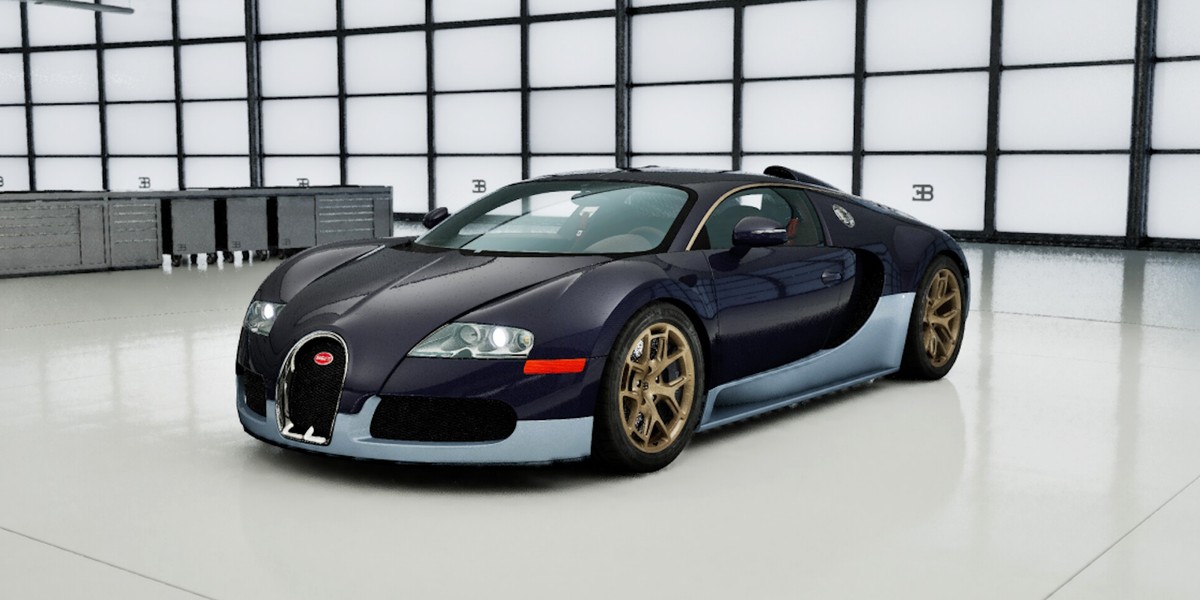
I spec’d a Blue Royal Carbon Super Sport. Brise blue lower split. Cognac leather inside lake blue accents. Champagne gold wheels. I could have matched all trim in gold but chose silver to keep some contrast. No personalized messages this time. Tupi noted people love those options. As long as nothing is offensive or infringes on trademarks. If it does Bugatti will politely recommend a pinstriper who isn’t bound by legal department rules.
Pricing? Impossible to guess. A solid repaint is straightforward. Switching to exposed carbon on panels that were previously painted is not. Super Sports use carbon but painted panels aren’t pattern matched for clear coats. They need replacement. My hypothetical build is expensive. Customers matching old rides to new Tourbillons aren’t sweating the invoice.
Driving the Beast Again
Is a twenty year old car still relevant? I drove a client’s Super Sport along the coast. Traffic speed. Not the 258 mph limiter. Nowhere near the 268 mph world record. But for thirty minutes it proved itself.
The aero shape used to feel awkward. Now it looks aggressive. Like an NHRA Funny Car that hinges up from the nose. John Phillips noted back in day that the car pulled stares. Still true. A stop at the beach drew crowds thicker than an ice cream truck giving away stacks of bills. Lane changes are dangerous because everyone wants to see you. At one stop racing driver Jamie Morrow the car’s handler received a flirtatious invitation from a stranger. Probably because of the car. People ask for phone numbers when this machine rolls by.
The Super Sport arrived in 2010 with 1200 hp and 1106 lb-ft of torque. Bigger turbos. Stiffer chassis. Larger radiator inlets. And more fuel capacity. It vaporizes 26.4 gallons in ten minutes of full throttle driving. Four fuel pumps instead of two.
By modern standards the Veyron feels ridiculously soft. Aaron Robinson and Phillips noted the ride was stiff and loud at launch. I found it plush. Quiet. Those Michelin tires act like air springs compared to current supercars. The shifter is in the normal position. Goodbye dash-mounted joysticks and screen taps.
The W-16 whistles until you hit triple digits then the turbos muffle it. The rear wing makes more noise. Clanking as it tilts for cooling.
But the speed. It feels as urgent as it did in 2010. Not whipper-snapper electric instant but smooth. Relentless. The engine exudes confidence. Light throttle pressure hints at vault-busting torque. I drove cautiously.
Not just from respect. I’m short. The seats don’t adjust enough for me to have legroom and headroom. I curled into the cockpit like a cat. Good for abs. Bad for proper pedal operation. If I ever spec mine for real custom padding is first on the list.
So you can change the paint on your fifteen-year-old legend. You can fix the interior you hated in 2009. Does it matter? The car turns heads anywhere it goes.