


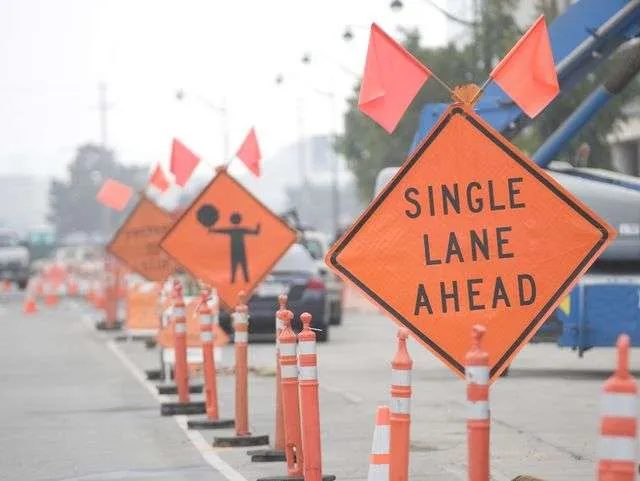
You’ve seen the sign. Orange. Bold. “LANE CLOSED IN 1000 FT.” Panic sets in. Your brain offers two distinct paths forward, both rooted in the same flawed assumption that politeness equals progress.
Option A: Hit the blinker immediately. Wait. Let someone in the open lane take pity on you. You merge early. You feel virtuous.
Option B: Stay put. Drive all the way to the gore point. Wait for the “polite” drivers in the other lane to make room. You zoom to the front, merging at the last possible second. You watch the early mergers seethe in your rearview mirror.
Most drivers pick Option A. It feels safer. It feels civilized. It is also completely wrong.
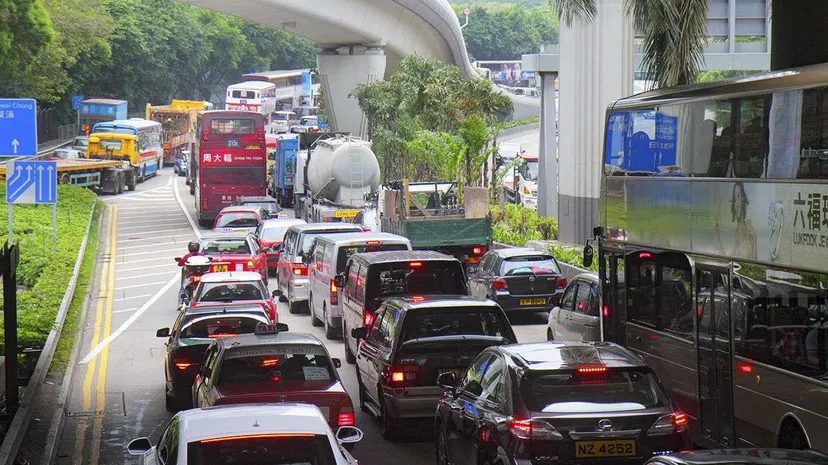
Research consistently shows that early merging creates a single, snaking bottleneck. It wastes road space. It increases frustration. And ironically, it raises the risk of low-speed rear-end collisions.
The solution is the zipper merge. Or as German engineers call it, Reißverschlusssystem. It’s not a suggestion. It’s a geometry problem.
The Mechanics of Traffic Flow
Imagine a zipper. When you pull the slider down, the teeth on the left and right interlock perfectly. They don’t bunch up one side and leave the other empty. Traffic works the same way when managed correctly.
In a zipper merge, vehicles in the closing lane use that lane fully. They drive to the point where the lane actually ends. Then, one car from the closed lane merges, followed by one from the open lane. Alternating. Like teeth.
Why does this work? Simple physics.
By using the closing lane until the last moment, you maximize the usable road surface area. You turn two lanes of traffic into one long, efficient stream rather than two short, congested lines.
The data is clear. Proper zipper merging cuts congestion by up to 40 percent.
It also stabilizes speed. When everyone merges early, the open lane moves fast while the closed lane crawls. This speed differential is a recipe for crashes. When everyone merges at the same point, traffic flows at a uniform rate. Less weaving. Fewer braking events. Safer roads.
The Human Factor
If the logic is so sound, why doesn’t everyone do it?
Because driving habits are hardwired. We’re conditioned to believe that taking a spot early is polite. We fear retaliation. We worry about being cut off. So we agree to suffer together in a single, inefficient line.
It’s a coordination failure.
States are starting to catch on. They’re realizing that education campaigns yield better ROI than widening roads.
Colorado and Minnesota have been pushing this for over a decade. They know that changing driver behavior is slower than changing concrete, but it’s cheaper.
Washington, Missouri, and Kansas have officially endorsed the system. Missouri launched a dedicated public education campaign in 2016. They’re not just posting signs. They’re teaching.
The goal isn’t just to inform. It’s to retrain. To shift the social norm from “merge early” to “merge late, merge evenly.”
The Skeptic’s View
It sounds perfect on paper. In practice, it requires every driver to be on the same page.
How many times has that actually happened?
Critics argue that the zipper merge relies too heavily on collective discipline. Without it, aggressive drivers can exploit the system, cutting in front of late mergers and causing chaos.
Bob Collins from Minnesota Radio put it bluntly. He compared the zipper merge to the push for the metric system in the 1970s.
“The zipper merge is going to be this century’s conversion to the metric system,” he suggested. “Great idea. Made perfect sense. And was dead on arrival.”
There’s truth to that. Habits die hard. But look at the alternatives. We can keep building wider highways, only to watch them fill up. Or we can use the space we already have.
The zipper merge isn’t just about efficiency. It’s about trust. It’s about believing that the stranger in the next lane will follow the rules if you do.
Until then,
The Zipper Merge Generation Gap
Let’s look at the numbers, because they tell a story most drivers ignore until they’re stuck in a lane closure. A 2013 survey conducted in Minnesota laid bare a stark divide in how we handle the zipper merge. It wasn’t just about preference; it was about age.
Among drivers aged 25 to 34, 45 percent said the zipper merge is a great idea. They see the logic. They understand the efficiency. They know that alternating lane usage keeps traffic moving and reduces the backup pile-up that happens when one lane empties out early.
Then you look at the seniors.
Only 8 percent felt comfortable with it.
That’s a massive cultural split. Half of young drivers see it as the superior method. A negligible sliver of older drivers buy into it. Why the hesitation? For many, the zipper merge feels like chaos. It requires trust in a stranger to merge at the last second. It feels aggressive to some, even though it’s actually the most orderly way to clear a bottleneck.
The data suggests that acceptance isn’t about intelligence or driving skill. It’s about exposure. Younger drivers grew up in a world where lane closures are common and the rules of the road are constantly evolving. Older drivers were trained in a system that rewards staying in your lane until the merge point appears miles back.
We’re asking drivers from two different eras to share the same road. And right now, they’re speaking different languages.