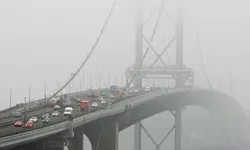
Fog is the ultimate ambush predator. You forget it exists right up until the moment it swallows the highway whole. There’s no such thing as a “fog day” off. You show up. You drive. You hope you don’t wreck.
If you’re from the arid Southwest, you might scoff at the idea that thick air is a hazard. You’ve probably thought, “You call this fog?” But driving in reduced visibility isn’t about where you’re from. It’s about physics. And most drivers are operating on faulty intuition.
Common sense often fails here. We assume more light equals better sight. That assumption gets people killed. Let’s look at the five most dangerous misconceptions drivers have about navigating mist, starting with the most egregious error on the list.
5: The High Beam Illusion
Picture this. You’re cruising down a two-lane road. Visibility drops from clear to zero in seconds. Your instinct kicks in. You reach for the stalk and click the headlights on. Smart. You need light to see the road.
But then you click it again. High beams.
You feel like a pro. You’re piercing the gloom. You’re wrong.
High beams do not cut through fog. They create a wall of white noise. The light reflects off the water droplets suspended in the air and bounces straight back into your eyes. It’s the same principle as looking into the sun. You squint. You look away. The light blinds you. In fog, the entire world becomes a blinding sheet of reflected glare.
The science backs this up. A reporter for Dateline NBC tested this with a visibility expert from Virginia Tech. The result was stark. With high beams on, the reporter couldn’t see a pedestrian standing just feet away. The glare was total. When he switched to low beams, the pedestrian appeared instantly.
Don’t use high beams in fog. It feels right. It sounds right. It doesn’t work.
4: Speed Is Your Friend in Light Fog
You see a patch of fog. It’s thin. Wispy. You tell yourself, “It’s just a little fog.” So you maintain your speed. Maybe you even accelerate slightly to get through it before it gets worse.
This is where you start losing the race against entropy.
You think slowing down in dense fog is for amateurs? Or maybe you’re the type who drives with one eye peeled and the other squinting against the gray. It’s a common misconception that familiarity with the route overrides the physics of visibility. It doesn’t. When the air turns opaque, your eyes stop working as reliable inputs. Slowing down isn’t just a suggestion; it is the single most effective mechanical intervention you can make to avoid ending up in a crumpled heap of metal.
But here is where it gets tricky. You might feel like you are creeping along at a crawl. You aren’t.
The Speedometer Illusion
Fog strips away depth perception. Without landmarks—trees, signs, building edges—your brain loses its ability to calculate velocity. This creates a visual illusion where your speed feels lower than it actually is. You could be doing 45 mph in a 35 zone and feel like you’re moving at 20.
Check your speedometer. Not a glance. A deliberate check. If you are relying on your gut feeling, you are already driving dangerously.
When you encounter a sudden patch of whiteout, resist the urge to panic-brake. Slamming the brakes sends a shockwave through the traffic behind you. Drivers following you likely have even less visibility than you do. If you stop abruptly, they won’t see you until the last possible second. The result? A chain-reaction pile-up that turns a commute into a crime scene. Ease off the gas. Let momentum drop naturally. Apply brakes only if the gap is closing faster than you can react.
“Hitting your brakes hard will be an unexpected move to the cars behind you, and you may even cause them to slam on their brakes as well.”
Turn Down the Volume, Roll Down the Glass
It’s tempting to crank the stereo. The fog is isolating. The silence is oppressive. You want noise to fill the void. But turning up the radio is a mistake you cannot afford.
In dense fog, vision is compromised. You must compensate by maximizing your other senses. This means turning the music down and rolling the window down.
It sounds counterintuitive. Who listens to tires on asphalt? But sound travels differently than light. Light scatters. Sound waves bend around obstacles and reflect off surfaces. By lowering the window, you create a direct auditory link to the environment. You might hear the squeak of brakes on a car 20 feet ahead. You might hear the thrum of an engine struggling in a hill. You might hear the specific frequency of tires hitting a puddle.
These are clues. They tell you a car is there before you see it. If you keep the windows up and the radio loud, you are driving blind and deaf. What is left? Nothing.
The Danger of Following Too Close
“Safety in numbers” is a social concept, not a driving rule. When the fog rolls in, many drivers instinctively zoom in behind the car ahead of them. They use that taillight as a guide post. They tailgate.
This is a fatal error.
The person in front of you is not your navigator. They might brake for a deer. They might swerve to avoid an obstacle you can’t see. They might even make a wrong turn. If you are riding their bumper, you have zero reaction time. You are essentially betting your life that they will drive perfectly for the next ten miles.
Keep a safe distance. Experts recommend staying at least three lane markers behind the vehicle in front. This gap gives you the precious seconds you need to process visual data and react physically. It feels lonely out there. You might feel exposed. But isolation is better than a rear-end collision.
Drive Like It’s a Clear Day
The irony of fog driving is that you must treat the conditions as if they are clear, but with extreme caution. You don’t drive aggressively because it’s clear. You don’t speed. You don’t weave.
But you also don’t treat the fog as a license to be erratic. The road is the same. The physics are the same. The only variable is your visibility.
If you follow these rules—check your speed, ease off the brakes, listen to the traffic, and keep your distance—you might just make it home. Most people don’t. They rely on instinct. Instinct fails when the air turns white.
So, what happens when the fog clears? Do you speed up immediately? Or do you stay in the slow lane, just in case?
The Visibility Trap
You know the drill. Rush hour traffic is crawling, and you spot a gap that lets you shave thirty seconds off your commute. You stomp the gas. Or maybe it’s that empty intersection with a stop sign where you treat the red paint as a suggestion rather than a rule because the street is dead silent. It feels efficient. It feels smart.
Until it rains.
Especially when the air turns thick and gray.
In fog, that aggressive maneuvering doesn’t just make you a bad driver. It makes you a hazard. The physics of visibility change completely. In clear weather, if you cut someone off, they might honk. They might roll down their window and offer you a hand gesture that involves their ring finger and whatever else is nearby. They have time to react. They have distance.
Fog strips that away.
When you accelerate or change lanes unpredictably in low-visibility conditions, you aren’t just being rude. You are removing the other driver’s ability to perceive a threat until it is too late. By the time they see your headlights, you are already in their lane. They can’t brake in time. They can’t swerve. The result isn’t an argument. It’s a collision.
The Cost of Impatience
Driving defensively in fog isn’t about being slow. It’s about being predictable.
When visibility drops, your margin for error shrinks to zero. If you weave through traffic, you force others to guess your next move. In normal conditions, drivers can anticipate a lane change. In dense fog, they can’t even see you until the last second. That split-second delay is all it takes to turn a near-miss into a total loss.
“Drive a little less unpredictably… it could save your life.”
This doesn’t mean you need to drive at the speed of a glacier. It means you need to respect the limited sight distance. If you can’t see the car in front of you for more than a few seconds, you don’t have the information needed to make complex driving decisions. Changing lanes? Skip it. Attempting to pass on a two-lane road? Don’t do it.
It feels boring. You’re missing out on that adrenaline hit of beating the clock. But consider the alternative. You shouldn’t be making moves on the road that invite anger from other drivers. The last thing you want is a commuter who is already stressed by the weather trying to navigate around your erratic swerves.
Staying Alive in the Gray
The goal isn’t to win the race to the next intersection. It’s to get there without hitting something that wasn’t there five seconds ago.
Foggers don’t care about your schedule. They don’t care if you’re late for a meeting or trying to beat the red light. They are operating in a world where depth perception is compromised and contrast is washed out. Your best defense is consistency. Keep your speed steady. Keep your lane position firm. Avoid sudden moves.
It’s not glamorous. It won’t make for a great story at the next dinner party. But it keeps you out of the hospital. And honestly? That’s a better outcome than any commute record you could break.
You’ll still make it to work. You’ll still avoid the stop sign argument.