


For almost three decades, Toyota has continued producing one of the most reliable engines ever made: the 1HZ 4.2-liter inline-six turbodiesel. While unavailable in the U.S. due to stricter safety and emissions standards, this powerplant remains in production for the Land Cruiser 70 Series in international markets, a testament to its enduring mechanical integrity. The 1HZ is not just an engine; it’s a workhorse that continues to thrive where modern alternatives falter.
The 1HZ: A Masterstroke of Mechanical Simplicity
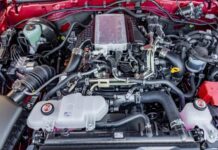
Introduced in 1990 as a replacement for the 2H diesel, the 1HZ was engineered for pure dependability. Its design—a cast-iron block with single overhead cams and indirect fuel injection—generates 129 horsepower and 210 lb-ft of torque at just 2,200 RPM. This low-stress configuration allows the engine to routinely exceed 300,000 miles with minimal maintenance beyond basic oil changes and timing belt checks.
Toyota deliberately avoided modernizing the 1HZ, opting instead for a “if it isn’t broken, don’t fix it” approach. The engine operates without electronic controls, making it ideal for remote regions where high-grade fuel and diagnostic equipment are scarce. This mechanical simplicity is why it remains a critical tool in areas where reliability trumps all else.
Engineering for Endurance
The 1HZ benefits from a robust design featuring a forged steel crankshaft, large bearings, and a high compression ratio (originally 22.7:1, later reduced to 22.4:1) that allows it to run on even low-quality diesel. The 94 mm bore and 100 mm stroke optimize low-end torque, making it ideal for off-road and heavy-duty applications.
Toyota’s minimal use of electronics further enhances reliability by reducing potential failure points. The mechanical fuel injection system is less complex than modern common-rail setups, ensuring long-term durability in harsh environments. Owners consistently report exceptional longevity with basic servicing, making the 1HZ a staple for commercial and off-road use.
Why Not in the U.S.?
Toyota doesn’t sell the Land Cruiser 70 Series in the U.S. because its archaic design fails to meet modern safety and emissions standards. Updating it to comply would be too costly and fundamentally alter the vehicle’s core philosophy. The 70 Series lacks advanced crash structures, modern restraint systems, and advanced emissions control technologies required by U.S. regulations.
Toyota evaluates the potential sales volume and finds it too low to justify the investment. U.S. buyers prioritize comfort and advanced tech, which Toyota already offers in other Land Cruiser models that meet local rules. The 70 Series is designed for conditions most Americans will never face, making it a niche product with limited appeal in the U.S. market.
Adapting to Modern Standards
In markets like Europe and Australia, Toyota keeps the Land Cruiser 70 Series relevant by offering newer engines like the 4.0-liter V-6 1GR-FE gasoline and the 2.8-liter turbodiesel 1GD-FTV. The 1GR-FE provides smooth power delivery and straightforward maintenance, while the 1GD-FTV offers improved efficiency and emissions compliance without sacrificing durability.
The 70 Series: A Niche Still Alive
The Land Cruiser 70 Series remains essential in regions where durability trumps comfort. Governments, aid agencies, mining companies, and militaries rely on it for extreme heat, poor fuel quality, heavy loads, and constant mechanical use. Its ladder frame and robust construction make it unmatched in challenging environments.
Toyota recognizes this enduring demand and continues production with minimal development costs. The platform uses amortized tooling, proven processes, and shared components, ensuring healthy margins. Discontinuing the 70 Series would leave Toyota without a dedicated heavy-duty work vehicle and weaken brand loyalty in key developing regions.
As Gerhard Horn, Senior Editor at CarBuzz, observes, “The 1HZ forces you to slow down and enjoy the journey… settling nicely at 65 mph, making the ride more relaxing.”
The Toyota Land Cruiser 70 Series, powered by the 1HZ or its modern successors, is not just a vehicle; it’s a testament to the enduring power of simple, overengineered reliability. It’s a machine built to last, and Toyota knows it.