


Mazda is aggressively repositioning its BT-50 pickup truck lineup to better compete in the Australian market, where the Ford Ranger and Toyota Hilux dominate. For the 2026 model year, Mazda is introducing two key trims: the return of the rugged BT-50 Thunder and a new value-focused BT-50 Boss. These updates come after a mid-cycle refresh in 2024, which included styling tweaks and revised tech, and the subsequent introduction of a smaller 2.2-liter turbodiesel engine in 2025.
Reinforcing the BT-50’s Position
The BT-50 has historically played second fiddle to rivals like the Ranger and Hilux. This is significant because Australia’s pickup market is fiercely competitive, with buyers demanding both capability and value. Mazda’s move to expand the lineup directly addresses this need. The current generation shares its platform with the Isuzu D-Max, a partnership that has proven stable but hasn’t allowed the BT-50 to fully carve out its own niche.
The Return of the Thunder: A Flagship for Adventure
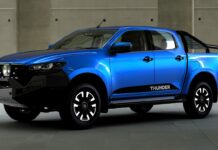
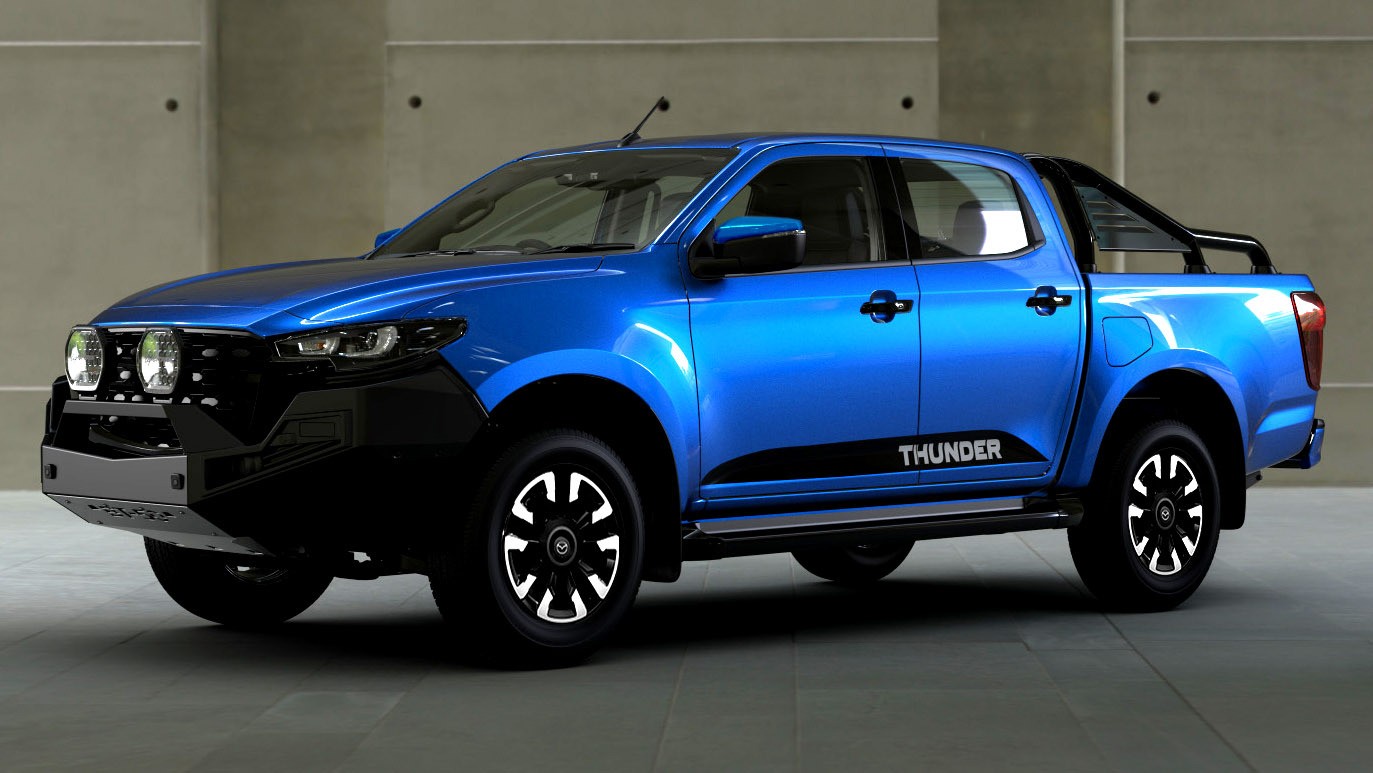
The 2026 BT-50 Thunder returns as the top-tier trim, building on the GT model. It stands out with features geared towards overlanding and off-road use. Key additions include a single-hoop steel bull bar integrated with Lightforce Beast LED driving lights, a tall steel sports bar, and a manual roller tonneau cover. Black decals featuring “Thunder” lettering complete the look.
While the Thunder doesn’t get the flared wheel arches of the previous generation, they remain available as an aftermarket option. This decision suggests Mazda is catering to buyers who prefer customization over a one-size-fits-all approach. The options list is extensive, including larger bull bars, 18-inch alloys, snorkels, light bars, and various bed setups.
Notably, the Thunder retains the standard suspension setup. This positions it as a more approachable off-roader, similar to the Toyota Hilux Rugged X, rather than the more aggressively tuned Ford Ranger Raptor or Isuzu D-Max Blade. Heavy-duty suspension packages remain available for those seeking more extreme capability.
Introducing the Boss: Value and Style Combined
The new BT-50 Boss takes a different route, focusing on aesthetics and affordability. Based on the dual-cab 4×4 XT grade, it features gloss black accents on the door handles, mirror caps, and grille, alongside a black steel sports bar, tub liner, and side steps. This trim is intended to appeal to buyers who prioritize visual appeal and practicality over hardcore off-road performance.
Engine Options and Power
Both the Thunder and Boss trims come standard with Mazda’s 3.0-liter turbodiesel engine, producing 187 hp and 450 Nm of torque. A six-speed automatic transmission channels power to all four wheels. Lower trims offer a smaller 2.2-liter turbodiesel with 161 hp and 400 Nm, paired with an eight-speed automatic and available in both rear-wheel and four-wheel drive configurations.
Mazda has notably resisted the industry trend towards electrification. The company’s Australian managing director recently stated that diesel will remain a key powertrain option for the foreseeable future. This is a deliberate choice, reflecting Mazda’s confidence in the continued demand for traditional diesel pickups.
Pricing and Availability
The 2026 Mazda BT-50 is available for order now in Australia, starting at AU$38,400 (US$27,100) for the entry-level single-cab XS model. The BT-50 Thunder, in dual-cab 4×4 configuration with the 3.0-liter diesel, is priced at AU$78,400 (US$55,300). The Boss trim slots in between at AU$60,220 (US$42,500). These prices place the Thunder slightly above key competitors like the Toyota Hilux Rugged X, while the Boss offers a more competitive entry point.
The BT-50’s updated lineup represents a focused effort by Mazda to strengthen its position in the Australian pickup market. By offering both rugged adventure trims and value-oriented options, the company hopes to attract a wider range of buyers and finally challenge the dominance of the Ranger and Hilux.