

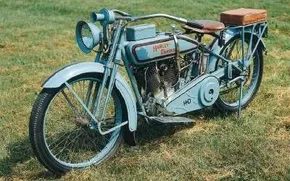
The 1916 Harley-Davidson J marked a distinct shift in aesthetic philosophy for the Milwaukee-based manufacturer. Before this model, Harleys were boxy affairs. The new J shed the square-cut corners of its predecessors for rounded edges. The silhouette changed too. It sat lower. It stretched out. It looked less like a utility tool and more like a machine built for the road.
Pedals disappeared from the lower frame on three-speed transmission models. You didn’t need to pedal anymore to get moving. A modern kickstarter took their place. This was a small mechanical tweak. It made mounting the bike easier. It signaled a move away from the bicycle heritage that defined the brand’s earliest days.
Mechanical Stagnation Meets Stylish Updates
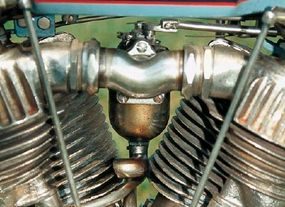
Look under the hood, and you find little changed. The engineering team left the core architecture alone. The forks remained a leading-link design. They hid coil springs inside. There was no radical suspension overhaul. The heart of the bike, the 61-cubic-inch intake-over-exhaust V-twin, saw minor updates only. Engineers added a curved intake manifold. It smoothed airflow into the cylinders. That was it. No horsepower spikes. No new technology. Just a cleaner flow.
But the paint told a different story.
The End of an Era: Grey to Olive Drab
For ten years, Harley-Davidson bikes wore a traditional grey paint job. It started in 1906. It was dull. It was functional. It was everywhere. 1916 was the final year for that grey.
They replaced it with Olive Drab.
Was it a splash of color? No. Olive Drab was hardly more vibrant than grey. But it stuck. It had an equally long tenure. It became the new standard. If you saw a Harley on the road in the late teens, it was likely wearing this military-adjacent hue.
Why did they change? Probably logistics. Probably war preparations. Probably just because grey was boring. The J was the last to wear the old color. After that, the world turned greenish-brown.
The styling changes were real. The kickstarter was a practical upgrade. The mechanicals stayed conservative. The paint defined the era. What came next would inherit a legacy of style over substance. And the road kept getting longer.
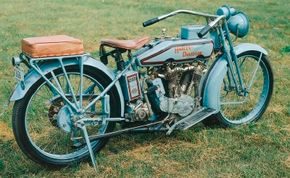
The 1916 Harley-Davidson J: A Modern Kickstart
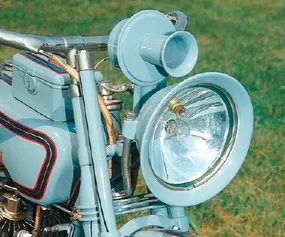
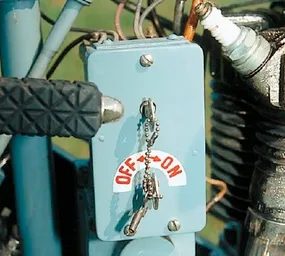
By 1915, electric lighting systems became available on Harley-Davidson motorcycles. The 1916 Harley-Davidson J motorcycle pictured here is so equipped. The model also debuted a modern kickstarter.
This wasn’t just a cosmetic update. It was a mechanical leap. The introduction of the kickstarter changed how riders started their bikes. Before this, starting often meant manual labor. The new system was easier. Faster. More reliable.
The electric lighting added another layer of utility. Riders could see and be seen. This mattered on dark roads. It mattered for safety. It mattered for range.
The 1916 Harley-Davidson J combined these features. It wasn’t just a bike. It was a statement. Harley-Davidson was moving forward. Other brands followed. But this model led the way.
The kickstarter mechanism was simple yet effective. It reduced wear on the engine. It saved time. Riders appreciated it. The electric lights were a bonus. They extended the usability of the motorcycle.
This era marked a shift. Motorcycles were becoming practical vehicles. Not just toys. The 1916 Harley-Davidson J exemplified this change. It balanced innovation with reliability.
Looking at the design, you can see the intent. Clean lines. Functional additions. No unnecessary fluff. It was built for purpose.
The impact of these features lasted. The kickstarter became standard. Electric lighting became expected. The 1916 Harley-Davidson J helped set those standards.
It’s interesting how small changes can define an era. A kickstarter. A light. These seem minor. But they changed riding. They made motorcycles more accessible.
The legacy of the 1916 Harley-Davidson J is in these details. It wasn’t the fastest. It wasn’t the most powerful. But it was practical. And that mattered.
Today, we take these features for granted. But back then, they were revolutionary. The 1916 Harley-Davidson J was ahead of its time. It showed what was possible.
The evolution didn’t stop there. But this model was a key step. It proved that motorcycles could be more than just basic transportation. They could be comfortable. Safe. Easy to use.
That’s the story of the 1916 Harley-Davidson J. Not just a machine. A milestone.
Where to Find More Two-Wheeled Content
If you are already digging into the specs and history, you probably want more. The internet is full of noise. Here are the specific hubs worth your time.
Classic Motorcycles
This is the archive for vintage steel. You will find detailed breakdowns of pre-1980 engineering. The focus is on mechanical purity. Carburetors. Cable shifters. No fuel injection to muddy the waters. If you miss the sound of a two-stroke or the smell of rich oil, this section delivers. It covers the golden era of racing and the daily commuters that got us there.
How Motorcycles Work
Sometimes you need the schematic, not just the story. This resource breaks down the physics. It explains suspension geometry without dumbing it down. You get the torque curves. The kinematics. It is for the rider who wants to know why a bike leans the way it does. Not a beginner’s guide. A technical deep dive into the machine itself.
Harley-Davidson Motorcycles
You cannot talk about American riding culture without the Milwaukee Eight. This section tracks the evolution of the cruiser archetype. From the early Knuckleheads to the current Revolution V-Twins. It covers the modifications. The custom scene. And the corporate shifts that changed the brand. It is less about performance metrics and more about the cultural footprint. The vibration. The style. The legacy.
Pick your angle. Go deeper.