




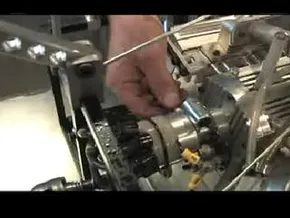
Gas engines mix fuel and air before it reaches the cylinder. Port injection or a carburetor will handle this task. The mixture flows and is compressed, creating a spark. It’s a simple linear process.
This is not the case with diesel engines. They reject the idea of mixing beforehand. Instead, they inject fuel directly into the cylinder. This is a big difference in the operation of diesel fuel injection systems. Fuel is enters after the air has already been crushed down. This changes everything about the hardware needed to run it.
Diesel fuel injectors are much more complex than gas engine fuel injectors. This is not just a nozzle. High pressure valve capable of withstanding extreme temperatures and compression. Its job is to take liquid fuel and turn it into a fine mist. But creating fog is only half the battle. The mist should be evenly distributed throughout the combustion chamber. If some components become rich while others remain lean, the engine will runs rough. It’s shaking. It won’t start.
Delivery mechanism
To achieve even distribution, diesel engineers get creative with airflow. It can’t rely on the intake stroke to spin the air like a gasoline engine. Therefore, they created special mechanical devices.
Some systems use induction valves. These are small auxiliary valves that help create a strong swirl of air inside the cylinder before injection. Some rely on the pre-combustion chambers. These are small auxiliary chambers operating on the principle of microturbines. The fuel is injected and ignited, causing a flame front and pressure wave to enter the main cylinder, creating the turbulence needed to mix the fuel with the remaining air.
Without this rotation, diesel fuel would collect at the bottom of the cylinder. It needs chaos to burn cleanly.
Fighting the cold
Diesel fuel does not burn by spark. It burns due to the heat of compression. The air is compressed so much that it becomes hot enough to ignite the fuel on contact. simple physics.
Unless it’s cold outside.
If the air in the cylinder is cold, it may not get hot enough to ignite the fuel on contact. The piston rises. Nothing happened. The engine just clicks. Fails to fire.
To solve this problem, diesel engines use glow plugs. They look like heating coils and resemble oven elements. They are located in the combustion chamber or prechamber. It heats up when you turn the key. They increase the ambient temperature of the air and reach the threshold for ignition when compressed.
This is why in diesel cars the wait light usually comes on before the engine starts. The system waits for the glow plug to complete operation. Without this source of heat, the cold becomes a gamble.
Common Rail Precision and Maintenance
Modern diesel engines rarely use the old-fashioned mechanical pump injection method. common rail diesel injection systems. This is a big change in pressure is managed.
In a common rail setup, one high-pressure fuel rail supplies fuel to all injectors. This provides more precise control. The ECU can time the injection with microsecond accuracy. If desired, fuel can be injected several times per cycle. The result is higher efficiency and lower emissions than older models.
But accuracy comes at a price. The injectors are expensive and complex. Some high-performance diesel engines can exceed pressures in excess of 30,000 psi. There is no place for dirt there.
Maintenance of these systems is very strict. The fuel filter cannot be ignored. If the filter becomes clogged, the high pressure pump starve the high-pressure pumps. Dirty nozzles can ruin the fog pattern. Regular cleaning and replacement of filters is not optional suggestions. They are a prerequisite for longevity. Neglecting the filter may damage the injector or high pressure pump.