




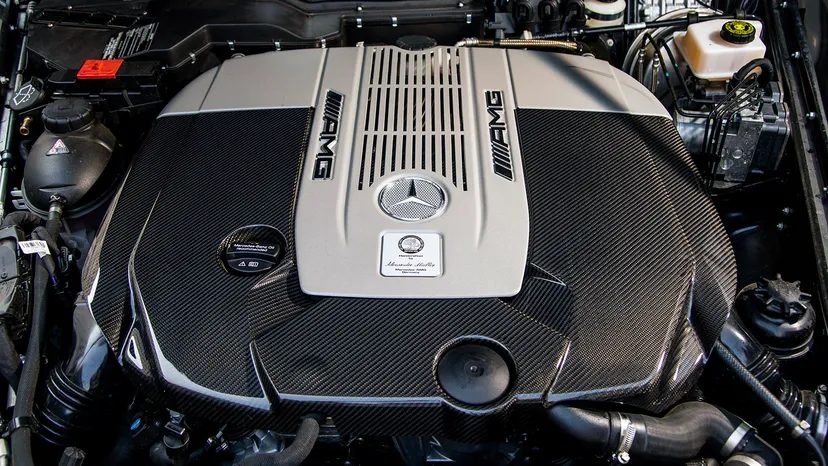
Open the hood. Stare at the mess of metal, plastic, and rubber. It looks like a bomb defusal kit designed by a chaotic artist. If you’re buying a car and hear terms like “2.5-liter inline-four” or “turbocharged start-stop,” you probably have no idea what that actually means for your daily drive.
Curiosity kills the cat. But knowing your engine keeps it alive.
At its core, a gasoline engine does one thing: it turns chemical energy into mechanical motion. It burns fuel inside a sealed chamber. That’s why it’s called an internal combustion engine. Combustion happens internally.
There are other beasts out there. Diesel engines. Gas turbines. But they all share the same basic goal. You also have external combustion engines—the steam engines that pulled trains. Coal burns outside the cylinder to create steam. Steam pushes the pistons. Internal combustion wins on efficiency and size. It’s smaller. It’s tighter. It works harder.
Let’s break down the heartbeat of your car.
The Four-Stroke Cycle
Almost every gasoline car uses the four-stroke combustion cycle. It’s also known as the Otto cycle, named after Nikolaus Otto, who nailed the concept in 1867.
The principle is brutal in its simplicity. Take high-energy fuel. Put it in a small, enclosed space. Ignite it. The resulting explosion releases massive energy as expanding gas. Harness that explosion hundreds of times per minute. You have motion.
The cycle has four distinct steps. Intake. Compression. Combustion. Exhaust.
- Intake Stroke: The piston starts at the top. The intake valve opens. The piston moves down. It sucks in a mix of air and a tiny mist of gasoline. You don’t need much fuel. Just enough to burn.
- Compression Stroke: The piston moves back up. It squashes that air-fuel mixture. Compressing the mixture makes the subsequent explosion significantly more powerful.
- Combustion Stroke: At the top of its travel, the spark plug fires. A tiny electrical arc ignites the compressed mixture. The gasoline explodes. The expanding gases drive the piston back down with force.
- Exhaust Stroke: The piston hits the bottom. The exhaust valve opens. The burnt gases are pushed out of the cylinder and down the tailpipe.
The cycle resets. The engine grabs another charge of air and gas.
This linear back-and-forth motion of the pistons needs to become rotational motion. Your wheels don’t spin up and down. They spin around. The crankshaft handles this conversion. Connected to the pistons by connecting rods, the crankshaft takes the straight-line force and twists it into rotation.
The crankshaft is the bridge between the piston’s linear chaos and the wheel’s rotational order.
It’s not just pistons and rods, though. You need a block to hold it all together. A head to seal the combustion chambers. Valves to let air in and exhaust out. A system to manage the fuel.
We’re looking at the basic engine parts now. Specifically, the cylinders that house this violence.
The magic happens between the piston and the cylinder wall. That’s where the combustion energy gets converted into motion. Simple enough. Most lawn mowers get by with a single cylinder. Cars? They need more muscle. Four. Six. Eight. Even twelve in some exotic corners of the market. But putting multiple cylinders together isn’t just about stacking them up randomly. It’s about geometry.
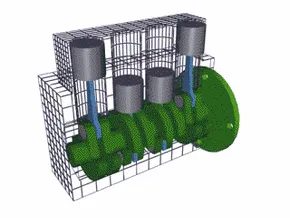
Inline engines: simplicity wins
Take that inline-four we touched on earlier. All four cylinders sit in a straight line. One after another. It’s clean. Efficient. Cheap to build because the block is a single casting. Manufacturing loves it. Parts are standardized. Maintenance is straightforward. If you pop the hood of a compact sedan or a hot hatchback, odds are you’re looking at an inline-four. They fit nicely in transversely mounted engines where space is tight across the front of the car.
But they’re long. Tall engines can raise the center of gravity. That’s not ideal for handling. And at high RPMs, the firing order can feel a bit clunky compared to more balanced arrangements. Still, for daily driving and fuel efficiency, the inline-four is the workhorse. You won’t go wrong with it.
V engines: packing power in a compact space
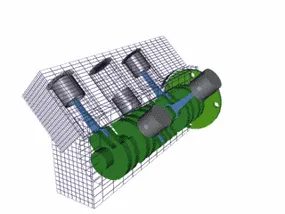
Now shift to a V-configuration. Two banks of cylinders angled away from each other. Usually 60 or 90 degrees apart, though other angles exist. This setup shrinks the engine’s footprint. Shorter than an inline-six. Lower profile. That makes it easier to fit into larger vehicles or performance cars where engine bay space is premium.
V-6s are everywhere in midsize SUVs and sedans. V-8s still rule the muscle car scene. They deliver that deep, throaty sound enthusiasts crave. And they’re smoother than inline-sixes at high revs thanks to the opposing pistons canceling out some vibrations. But there’s a catch. Complexity. More parts. More exhaust manifolds to wrap around. Higher manufacturing costs. And cooling can be tricky with that narrow valley between the banks.
Flat or boxer engines: low and wide
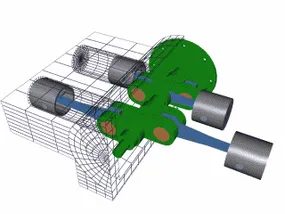
Then there’s the flat-four. Flat-six. Horizontally opposed. Pistons move away from each other like boxers in a ring. Hence the nickname. Porsche uses them. Subaru relies on them. Why? Because the flat layout lowers the center of gravity significantly. Better weight distribution. Less body roll in corners. The engine sits low in the chassis. That’s a handling advantage that inline and V-engines struggle to match.
Flat engines also vibrate less than inline-fours. The opposing pistons balance each other out naturally. No need for complex counter-shafts. But they’re wide. Very wide. That makes installation in transverse layouts nearly impossible. You need a longitudinal setup. More space needed. And maintenance access can be a nightmare. Oil leaks from the rear main seal are a common gripe. Still, for drivers who prioritize handling and feedback, the flat engine is hard to beat.
Which layout fits your needs?
It comes down to priorities. Do you want cheap repairs and easy packaging? Go inline. Need more power in a smaller package? V-engine. Want the best handling dynamics and don’t mind a wider engine bay? Flat. There’s no perfect answer. Just
The Spark Plug and Valve Timing
Combustion doesn’t happen by accident. The spark plug provides the ignition source, firing the spark that lights the air/fuel mixture. Timing is everything here. If the spark hits too early or too late, efficiency plummets.
Those valves are just as critical. The intake and exhaust valves open and close in a precise sequence. They allow the mixture in and let the exhaust out. Crucially, both valves must remain sealed during the compression and power strokes. If the chamber isn’t airtight, you lose pressure. You lose power.
Piston Dynamics and Ring Failure
The piston itself is a simple cylinder of metal, sliding up and down within the bore. But the real magic—and the most common source of maintenance headaches—lies in the piston rings.
These rings create a sliding seal between the piston’s outer edge and the cylinder wall. They have two non-negotiable jobs:
- Seal the combustion chamber so the fuel/air mix and exhaust gases don’t leak past the piston into the sump.
- Keep engine oil in the sump from migrating up into the combustion chamber.
When those rings wear out, the seal breaks. This is why older cars often develop oil consumption issues. If you are topping off a quart every 1,000 miles, your rings are likely shot, letting oil burn off in the chamber. Modern materials have improved ring longevity significantly, which is why contemporary engines can stretch oil change intervals and last longer overall.
The Connecting Rod and Crankshaft
The connecting rod bridges the gap between the piston and the crankshaft. It needs to rotate at both ends. Why? Because the piston moves in a straight line while the crankshaft rotates. The rod changes angle to accommodate that motion, translating linear energy into rotational force.
That force ends up at the crankshaft. It takes the piston’s up-and-down motion and converts it into circular motion. Think of it like the crank handle on a jack-in-the-box. You push down, the shaft turns. It’s a simple mechanical principle, but it’s the heart of the engine’s output.
The Sump and Oil Management
Surrounding the crankshaft is the sump, or oil pan. This reservoir holds the lubricating oil that circulates through the engine. Gravity pulls the oil to the bottom of the sump, where the oil pump can grab it and send it back up to the bearings, pistons, and valves.
Without this reservoir, the friction would destroy the engine in minutes. The sump keeps the moving parts floating in a film of oil, reducing wear and dissipating heat.
Engine Problems
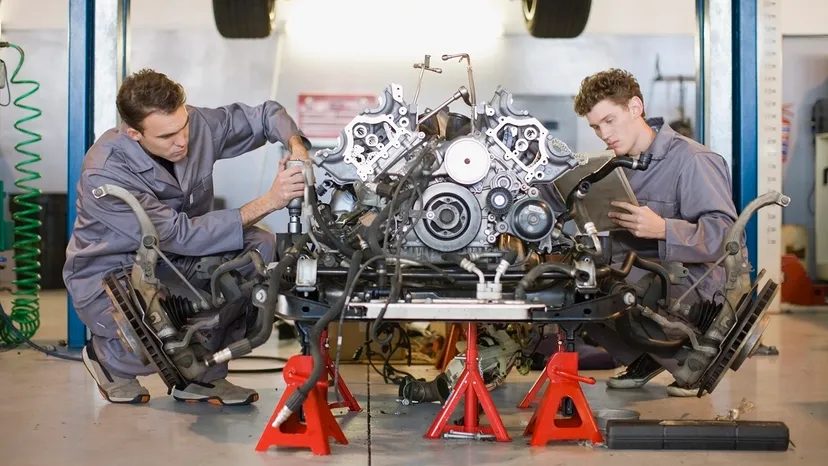
You turn the key. The starter whirs. The engine turns over. But it doesn’t catch.
This is the classic “crank no-start” scenario. It’s frustrating, sure. But it’s also logical. You already know the basics of internal combustion. Now you just need to filter the noise.
There are three fundamental requirements for an engine to fire. If any one of them fails, you’re stuck pushing.
- Correct fuel mix.
- Proper compression.
- Strong spark.
Everything else is secondary. Thousands of minor glitches can cause a no-start, but these three are the “big three.” Ignore them at your peril.
The Fuel Mix Problem
Your engine needs fuel and air in the right ratio. Too lean, too rich, or no mixture at all, and combustion dies.
Consider the obvious first: you might simply be out of gas. The engine pulls in air, but without fuel, there’s nothing to burn.
But what if you have gas?
A clogged air intake can starve the engine of oxygen. You get fuel, but not enough air. The mix becomes too rich. The spark plugs get fouled. The engine chokes.
Conversely, a faulty fuel system might pump too much or too little fuel. Modern engines use sensors to adjust this, but older carbureted systems? They’re finicky. If the float is stuck or the jets are clogged, the mixture is off.
Then there’s contamination. Water in your gas tank is a killer. It doesn’t burn. It sits at the bottom. If the fuel line draws that sludge, the engine sputters and dies. Impurities disrupt the chemical reaction entirely.
Compression: The Seal of Life
Compression is what makes the explosion powerful. If air and fuel can’t be squeezed tightly, the resulting explosion is weak. Or non-existent.
Lack of compression usually points to a leak. Where?
Worn piston rings. These rings seal the gap between the piston and the cylinder wall. When they wear down, the air/fuel mixture escapes past the piston during the compression stroke. You lose pressure. You lose power.
Leaking valves. The intake and exhaust valves must close tightly. If the seats are burnt or the stems are bent, gas escapes into the exhaust or intake manifold instead of staying in the cylinder.
A blown head gasket. This is the most common structural failure leading to compression loss. The cylinder head bolts onto the engine block. Between them sits a thin gasket designed to create a perfect seal.
When that gasket fails, it breaks down. Small holes form. The seal leaks. Compression leaks out into the cooling system or oil passages. The engine won’t start because the pressure never builds.
Spark: The Ignition Trigger
Without spark, fuel is just liquid. You need a spark plug to ignite it.
If the spark is weak, the fuel might not ignite. This often happens when the spark plug itself is worn. Electrodes erode over time. The gap widens. The spark struggles to jump.
Or the wire is cut.
If the ignition wire leading to the plug is severed or missing, the current can’t reach the plug. No spark.
But it’s not just about presence. It’s about timing.
Ignition timing dictates when the spark fires relative to the piston’s position. If the spark occurs too early, it fights the piston moving up. If it fires too late, the piston is already moving down. The fuel ignites, but the explosion doesn’t push the piston effectively. In both cases, the engine won’t start or runs poorly.
Other Critical Failures
Beyond the big three, other systemic failures can halt an engine instantly.
Dead battery. Simple. No power means no starter motor. No starter, no cranking.
Worn bearings. The crankshaft rotates on bearings. If they’re worn out or seized, the crankshaft can’t turn. The engine locks up.
Valve timing issues. If the camshaft fails or the timing belt snaps, the valves don’t open and close in sync with the pistons. Air can’t get in. Exhaust can’t get out. The engine is suffocating.
Oil starvation. Run out of oil, and you lose lubrication. Friction spikes. Heat rises. Pistons seize against the cylinder walls. The engine stops dead. Permanently.
Perfection Isn’t Required
A running engine doesn’t need to be perfect. It just needs to function within acceptable tolerances.
You’ll notice when things are off. Rough idling. Hard starting. Loss of power. These are symptoms.
But when the engine won’t start at all, you’re dealing with a hard fail. One of the fundamental systems has broken.
We’ve covered the why. The next step is looking at the how. Specifically, the subsystems that manage these failures.
Engine Valve Train and Ignition Systems
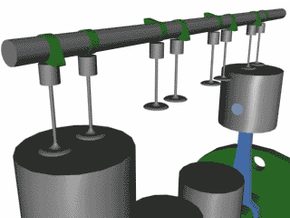
Most modern powerplants rely on a specific architecture to manage airflow, and the choice of technology here dictates how much power you get out of every drop of fuel. The overhead cam system is the standard for a reason.
Where the Cam Lives Matters
The valve train’s job is simple: open the valves, close the valves. Repeat. The mechanism driving this is the camshaft, a shaft with lobes that push the valves up and down. You can see this mechanical action in Figure 5.
Modern engines almost exclusively use overhead cams. This puts the camshaft directly above the valves. The lobes hit the valves either directly or through a very short pushrod linkage. This setup reduces inertia and allows the engine to rev higher without the valves floating.
Older designs placed the camshaft in the oil sump, near the crankshaft. That required a long chain of lifters and pushrods to get the signal to the top. It worked. It still does in some cheap or vintage machines. But the overhead design is lighter and more efficient.
Keeping Time in Sync
The crankshaft spins twice for every once the camshaft spins. This 2:1 ratio is non-negotiable. If the pistons are at top dead center and the valves are open, the engine blows up. To prevent this, a timing belt or a timing chain links the two shafts.
This linkage ensures the valves open and close at the exact millisecond the pistons are ready for them.
Why Dual Overhead Cams?
High-performance engines don’t just want more air; they want more flow. A single valve per port is a bottleneck. Modern high-output engines use four valves per cylinder: two for intake, two for exhaust.
You can’t move four independent valves with one camshaft efficiently. So, engineers use two camshafts per bank of cylinders. One cam controls the intake valves. The other controls the exhaust. This is where the term dual overhead cams (or DOHC) comes from.
It’s not just marketing. It’s physics. More valves mean better breathing. Better breathing means more power. And more power requires a more complex valve train. The overhead cam setup makes that complexity manageable.

How the Ignition System Fires Your Cylinders
The ignition system (Figure 6) doesn’t just turn on the car. It generates a high-voltage electrical charge and sends it racing to the spark plugs. It travels through ignition wires to get there.
First, that charge hits the distributor. You’ll find it tucked under the hood in most vehicles. It’s the hub. One wire comes into the center. Four, six, or eight wires shoot out. The number depends entirely on your cylinder count.
These ignition wires deliver the charge to each spark plug. The timing is tight. Only one cylinder gets a spark at a time. This staggered firing keeps the engine running smoothly. No jerks. Just rhythm.
We’ll cover how your car starts, cools, and circulates air next.
Engine Cooling, Air-intake and Starting Systems
Cooling and Air Intake Mechanics
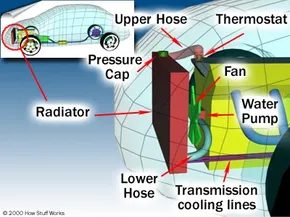
Most modern cars rely on a liquid-based cooling system to keep the engine from melting down. The radiator and the water pump are the heavy lifters here. Coolant circulates through passages drilled around the cylinders, absorbs the heat, and then dumps it into the radiator before cycling back. It’s a closed loop.
But not every engine plays by these rules. You’ll find air-cooled setups in older machines like pre-1999 Volkswagen Beetles, plus most motorcycles and lawn mowers. You can spot them instantly. Look at the outside of the cylinders. If you see fins, it’s air-cooling. The fins increase surface area to dissipate heat into the air stream. This setup keeps the engine lighter. It also makes it run hotter. And hotter usually means shorter life and lower performance. It’s a trade-off.
Now that we’ve covered how the heat gets out, let’s talk about what gets in. Air circulation isn’t just background noise. It’s the fuel for the fire.
Most street cars are normally aspirated. That’s a fancy way of saying the engine breathes naturally. Air passes through a filter and drops directly into the cylinders. Simple. Effective. But if you want more power, you need more air.
This is where forced induction changes the game. High-performance and modern efficiency engines are either turbocharged or supercharged. Instead of natural airflow, these systems pressurize the incoming air. More pressure means you can pack more air and fuel into each cylinder during the intake stroke. That pressurization is called boost.
How do you generate that boost? Two different mechanical methods.
A turbocharger uses waste energy. It sits in your exhaust pipe. Hot exhaust gases spin a turbine. That turbine is connected by a shaft to a compressor wheel in the intake tract. It’s efficient. It recycles energy that would otherwise just disappear up the tailpipe. A supercharger, on the other hand, is mechanically driven. It’s bolted directly to the engine, usually via a belt or gears, and spins the compressor independently of exhaust flow.
Since the turbocharger is essentially scavenging heat and pressure from the exhaust, it unlocks power from smaller engines. Think about a small four-cylinder engine. Add a turbo, and it can produce horsepower figures usually reserved for a larger six-cylinder. The kicker? You get 10 to 30 percent better fuel economy. You’re getting more work out of less fuel.
Starting System Deep Dive
Boosting performance is one thing. Getting the engine to move in the first place is another. What happens when you turn the key?
The starting system has two main components: the electric starter motor and the starter solenoid. It’s a brute-force operation. The starter motor has to physically spin the engine over several revolutions. Why? Because combustion won’t start until the pistons are moving. The engine needs momentum to complete the intake, compression, power, and exhaust strokes.
Spinning a cold engine is hard work. The starter motor has to overcome significant resistance.
- Internal Friction : Piston rings rubbing against cylinder walls create drag.
- Compression Pressure : If a piston is near top dead center, the compressed air-fuel mixture pushes back against it.
- Valve Train Energy : The camshaft has to push open and close valves. That takes force.
- Accessory Load : Everything bolted to the engine is dragging it down. The water pump, oil pump, and alternator are all attached. The starter has to spin them too.
This resistance demands massive current. Car electrical systems run on 12 volts. To move that heavy flywheel, the starter motor draws hundreds of amps. You can’t get that kind of current through a standard ignition switch without melting the contacts. That’s why we need the starter solenoid.
Think of the solenoid as a heavy-duty electronic switch. When you turn the key, you send a small signal to the solenoid. It closes the high-current circuit, allowing the battery’s full power to flood the starter motor. Click. Whir. Engine turns over.
What Comes Next
We’ve covered how the engine stays cool, how it breathes, and how it starts. But an engine is a machine that consumes resources and creates waste. It needs oil to survive. It needs fuel to burn. And it needs a way to expel the byproducts of combustion without choking itself.
Next, we’ll break down the subsystems that handle lubrication, fuel delivery, exhaust management, and
You fill the tank. You check the oil. But how does that gas actually turn the wheels? It starts with the fuel system.
Your engine doesn’t just burn liquid. It burns a mist. The fuel system pumps gasoline from the tank and mixes it with air. The goal is a precise air-to-fuel ratio. This mixture flows into the cylinders. Without the right mix, you get no power. Or worse, engine damage.
Modern cars use two main methods to deliver this fuel. Port fuel injection and direct fuel injection.
In port fuel injection, fuel is sprayed right above the intake valve. It mixes with air before entering the cylinder. Direct injection is more aggressive. Fuel shoots directly into the combustion chamber. High pressure allows for finer misting. This leads to better efficiency.
Older cars used carburetors. They mixed fuel and air mechanically as air flowed in. They were simple. But they lacked precision. Modern injection is computer-controlled. It adjusts millisecond by millisecond.
Lubrication Keeps Things Moving
Gas creates power. Oil prevents friction.
The lubrication system is the engine’s lifeblood. It coats moving parts. Without it, metal grinds against metal. Heat spikes. Parts seize.
Two areas need the most attention. Pistons and bearings. Pistons slide up and down in cylinders. They need a slick surface. Bearings allow the crankshaft and camshafts to rotate. They carry heavy loads.
Here is the cycle.
- Oil sits in the oil pan (sump) at the bottom.
- The oil pump sucks it up.
- It passes through the oil filter. Grit and metal shavings are trapped.
- High pressure forces oil through galleries.
- It sprays onto bearings and cylinder walls.
- Gravity pulls it back down to the sump.
This cycle repeats thousands of times per minute. If the pump fails, the engine dies. If the filter clogs, pressure drops. Check your oil. Always.
Taming the Noise and Fumes
You’ve put fuel in. You’ve lubricated the moving parts. Now the explosions happen.
These explosions create pressure. They create noise. Thousands of small detonations per minute. Without a exhaust system, you’d hear every single one. It would be deafening.
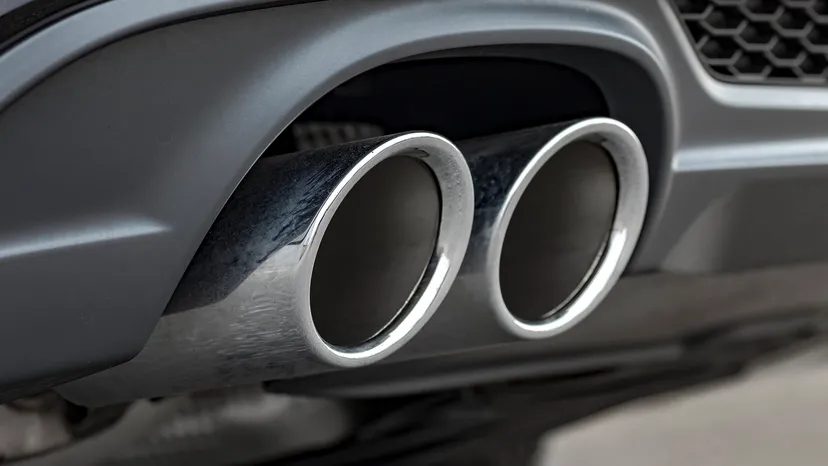
The exhaust system captures these gases. It channels them out the back. The muffler is key here. It dampens the sound. It turns a gunshot into a hum.
But smoke isn’t just noise. It’s waste.
Enter the emission control system. Modern cars are complex laboratories. They monitor every breath of exhaust.
The heart of this system is the catalytic converter. It uses catalysts and oxygen. It burns off unused fuel. It breaks down harmful chemicals. It turns pollutants into less harmful gases.
Oxygen sensors monitor the exhaust stream. They tell the computer how much oxygen is present. The computer adjusts the fuel mix in real-time. This ensures the catalyst works efficiently. Less waste. Cleaner air.
The Electrical Backbone
Gas powers the pistons. Electricity powers everything else.
Your car has a battery. It provides 12-volt DC power. It starts the engine. It runs the radio, headlights, windows, and computers. But the battery is not a generator. It’s a storage device.
It needs to be recharged.
That’s the alternator.
Connected to the engine by a belt, the alternator spins. It generates electricity. It sends that power back to the battery. It also powers electrical loads while the engine runs.
If the belt snaps, the alternator stops. The battery drains. The engine stalls. You are stuck.
Producing More Engine Power
You know how the stock engine works. Fuel, air, oil, exhaust, electricity. It’s a balanced ecosystem. But enthusiasts rarely settle for stock.
They want more power.
How do you get it? You disrupt the balance. Or rather, you optimize it.
There are three main ways to increase horsepower and torque.
- Increase Airflow : More air means more oxygen. More oxygen allows more fuel to burn. Bigger intake manifolds. High-flow air filters. Less restriction.
- Increase Fuel : You can’t add air without adding fuel. Larger injectors. Higher pressure pumps. Tuning the ECU to support
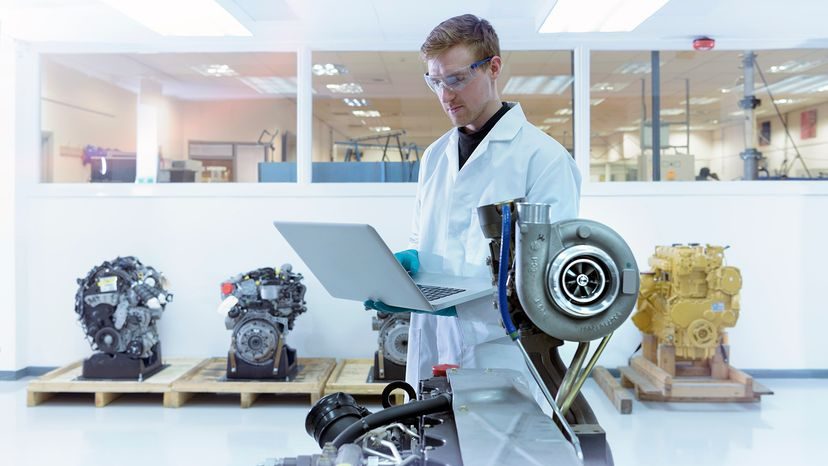
The Mechanics of Horsepower: How Engines Actually Work
You can start to see that there isn’t just one way to squeeze more power out of an engine. Car manufacturers are constantly tweaking variables to boost performance or improve fuel efficiency.
Increase displacement. More displacement means more power because you burn more fuel every revolution. You can get there by making cylinders bigger or adding more cylinders. Twelve cylinders is generally considered the practical limit.
Increase the compression ratio. Higher compression ratios produce more power, up to a point. The more you compress the air/fuel mixture, the more likely it is to spontaneously burst into flame before the spark plug even fires. Higher-octane gasoline prevents this early combustion. That is why high-performance cars need premium fuel—their engines use higher compression ratios to get more power.
Stuff more into each cylinder. If you can cram more air (and therefore fuel) into a cylinder of a given size, you get more power without increasing the fuel required for combustion. Turbochargers and superchargers pressurize incoming air to effectively force more air into the cylinder.
Cool the incoming air. Compressing air raises its temperature. You want the coolest air possible in the cylinder because hotter air expands less during combustion. Many turbocharged and supercharged cars use an intercooler. This is a special radiator through which compressed air passes to cool off before entering the cylinder.
Let air in more easily. As a piston moves down in the intake stroke, air resistance robs power. You can reduce this by putting two intake valves in each cylinder. Some newer cars use polished intake manifolds to eliminate resistance there. Bigger air filters also improve airflow.
Let exhaust exit more easily. If air resistance makes it hard for exhaust to leave a cylinder, it robs power. Resistance drops when you add a second exhaust valve. A car with two intake and two exhaust valves has four valves per cylinder, which improves performance. When a car ad says it has four cylinders and 16 valves, it means four valves per cylinder.
If the exhaust pipe is too small or the muffler has high resistance, this causes back-pressure, which has the same effect. High-performance exhaust systems use headers, large tail pipes, and free-flowing mufflers to eliminate back-pressure. “Dual exhaust” means two pipes instead of one to improve flow.
Make everything lighter. Lightweight parts help the engine perform better. Each time a piston changes direction, it uses energy to stop one travel and start another. Lighter pistons take less energy. This results in better fuel efficiency and performance.
Inject the fuel. Fuel injection allows precise metering of fuel to each cylinder. This improves performance and fuel economy.
In the next sections, we’ll answer some common engine-related questions submitted by readers.
Engine Questions and Answers
What is the difference between a gasoline engine and a diesel engine?
In a diesel engine, there is no spark plug. Diesel fuel is injected into the cylinder, and the heat and pressure of the compression stroke cause the fuel to ignite. Diesel fuel has a higher energy density than gasoline, so a diesel engine gets better mileage.
What is the difference between a two-stroke and a four-stroke engine?
Most chain saws and boat motors use two-stroke engines. A two-stroke engine has no moving valves, and the spark plug fires each time the piston hits the top of its cycle. A hole in the lower part of the cylinder wall lets in gas and air. As the piston moves up, it is compressed, the spark plug ignites combustion, and exhaust exits through another hole in the cylinder. You have to mix oil into the gas in a two-stroke engine because the holes in the cylinder wall prevent the use of rings to seal the combustion chamber. Generally, a two-stroke engine produces a lot of power for its size because there are twice as many combustion cycles occurring per rotation. However, a two-stroke engine uses more gasoline and burns lots of oil, so it is far more polluting.
Are there any advantages to steam engines?
The main advantage of a steam engine is that you can use anything that burns as the fuel. For example, a steam engine can use coal, newspaper, or wood for the fuel, while an internal combustion engine needs pure, high-quality liquid or gaseous fuel.
Why have eight cylinders in an engine? Why not have one big cylinder of the same displacement?
There are a couple of reasons why a big 4.0-liter engine has eight half-liter cylinders rather than one big 4-liter cylinder. The main reason is smoothness. A V-8 engine is much smoother because it has eight evenly spaced explosions instead of one big explosion. Another reason is starting torque. When you start a V-8 engine, you are only driving two cylinders (1 liter) through their compression strokes, but with one big cylinder you would have to compress 4 liters instead.
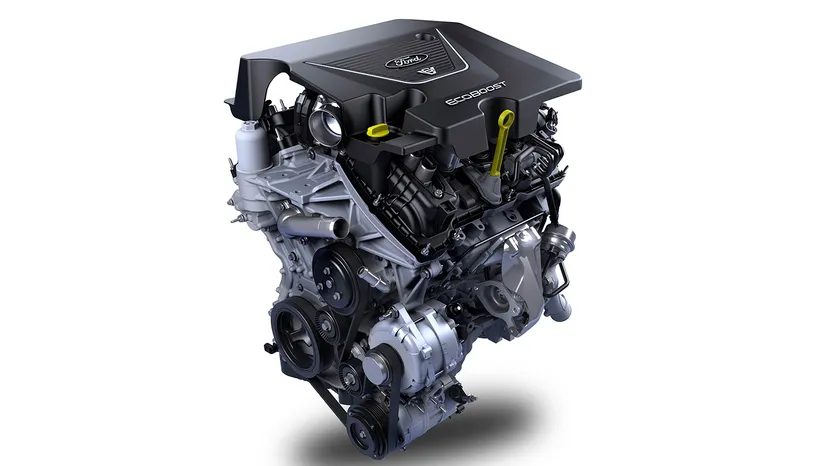
Inline vs. V-Shape
The cylinder count dictates an engine’s personality. Each cylinder houses a piston. Those pistons turn the crankshaft. More pistons pumping means more combustion events per second. Power generates faster. That is basic physics.
Four-cylinder engines usually sit in a straight line. Inline. Simple. Six-cylinders often arrange in a “V”. That compact shape allows for shorter blocks. American automakers loved V6 engines. They were powerful. They were quiet. But the market shifted. Turbocharging changed the game.
The American Perception Shift
History matters here. Consumers used to reject four-cylinder power. They thought these engines were slow. Weak. Unbalanced. Lacking acceleration. Then came the Japanese imports. Honda and Toyota started installing efficient four-bangers in the 1980s and ’90s. Americans woke up. The Toyota Camry outsold American rivals. The compact engine gained respect.
Modern Engineering Tricks
Today, a 4-cylinder can mimic V6 performance. Look at Ford’s EcoBoost. They use turbocharging to force more air into smaller displacement. Mazda uses SKYACTIV technology for aerodynamics and efficiency. Less stress on the engine. Better performance. Lighter materials help too. The gap between the two engine types is narrowing.
When You Still Need a V6
The disparity has lessened. But V6 engines still have jobs to do. They are not just for performance cars. Trucks need them. If you tow a trailer or haul heavy loads, you need torque. You need raw power. Efficiency takes a back seat in those scenarios. A turbo-four might struggle with the sustained load. The V6 delivers.
How Engines Actually Work
People often ask about the basics. What is inside that metal box?
The Core Components
The heart of the engine is the cylinder. A piston moves up and down inside it. Key parts include:
– Spark plugs
– Valves
– Piston rings
– Connecting rods
– Crankshaft
– The sump
The Four-Stroke Cycle
Almost every gasoline engine uses a four-stroke combustion cycle. It converts fuel into motion.
1. Intake stroke
2. Compression stroke
3. Combustion stroke
4. Exhaust stroke
Why Won’t It Start?
If your car won’t start, check the “big three.”
1. Bad fuel mix
2. Lack of compression
3. Lack of spark
Thousands of minor issues can cause problems. But these three are the fundamentals.