


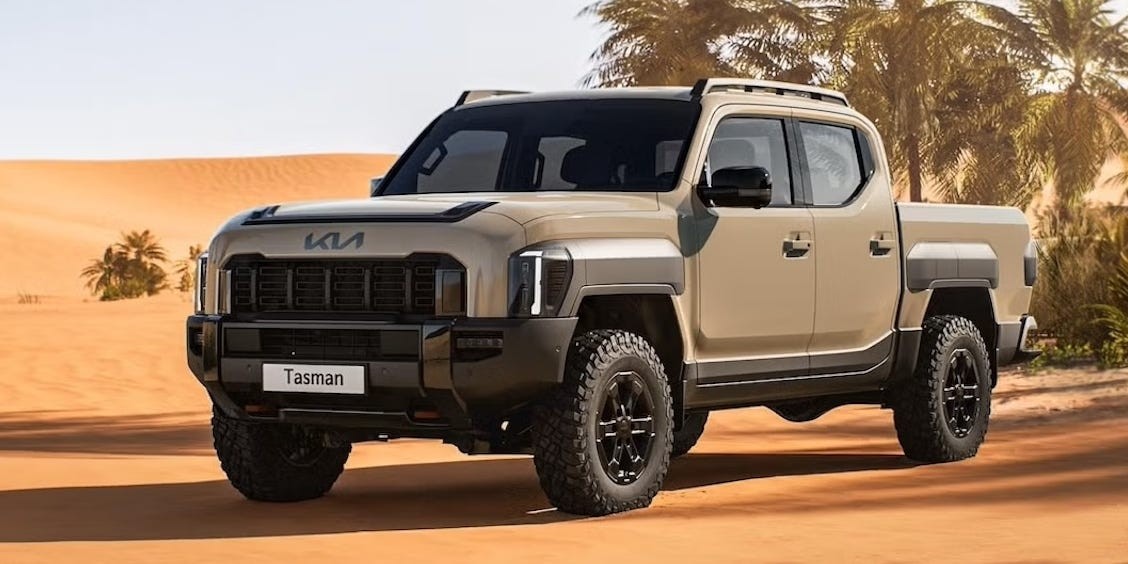
Kia is officially preparing to enter the highly competitive mid-size pickup truck market. While the brand has been cautious about its North American launch strategy, recent developments suggest that a rugged, body-on-frame truck—potentially named the Tasman —is on the horizon for U.S. consumers before 2030.
A Shift in Strategy for the North American Market
Initially, Kia indicated that its new pickup truck might not make it to North American shores. However, recent regulatory moves suggest a change in course. The company filed for a U.S. trademark for the “Tasman” name in early 2026, a strong signal that the brand is preparing for a domestic release.
This shift is significant because the mid-size pickup segment is one of the most profitable and fiercely contested areas of the automotive market. By entering this space, Kia is moving beyond its traditional focus on crossovers and SUVs to compete directly with established giants.
Powertrain and Performance Expectations
While technical specifications remain under wraps, Kia has provided several key clues regarding what will lie under the hood. To meet modern efficiency standards and consumer demand for versatility, the truck is expected to feature:
- Hybrid Powertrains: A standard hybrid option to balance power with fuel economy.
- Range-Extended Plug-in Hybrids (PHEV): A potential high-end option designed to offer longer electric driving ranges and reduced “range anxiety” for off-roaders.
The inclusion of electrified options is a strategic move. As the industry transitions away from pure internal combustion, offering hybrid variants allows Kia to appeal to both traditional truck buyers and the growing demographic of eco-conscious drivers.
The Competitive Landscape and Pricing
For the Tasman to succeed in the United States, it must go head-to-head with the industry’s “Big Three” of the mid-size segment: the Chevrolet Colorado, the Ford Ranger, and the Toyota Tacoma.
To remain a viable contender, analysts suggest Kia will need to hit a competitive price point, likely starting around $35,000. While official trim levels haven’t been confirmed, industry expectations suggest a tiered lineup similar to current market leaders:
- LX (Base): An entry-level model for work and daily utility.
- EX (Mid-level): A balanced trim with more comfort features.
- SX (Upscale): A premium version focused on technology and aesthetics.
- X-Pro (Off-road): A ruggedized variant equipped with specialized suspension and terrain-handling gear.
The Hyundai Connection
The development of the Tasman does not exist in a vacuum. Kia’s sister brand, Hyundai, is also working on a body-on-frame mid-size pickup, which was recently teased via the Boulder SUV concept.
It is highly probable that both Kia and Hyundai will utilize a shared platform. This “platform sharing” is a common industry trend that allows manufacturers to reduce development costs while producing two distinct vehicles that share the same underlying engineering, reliability, and structural integrity.
Summary: Kia is poised to challenge the dominance of the Toyota Tacoma and Ford Ranger