
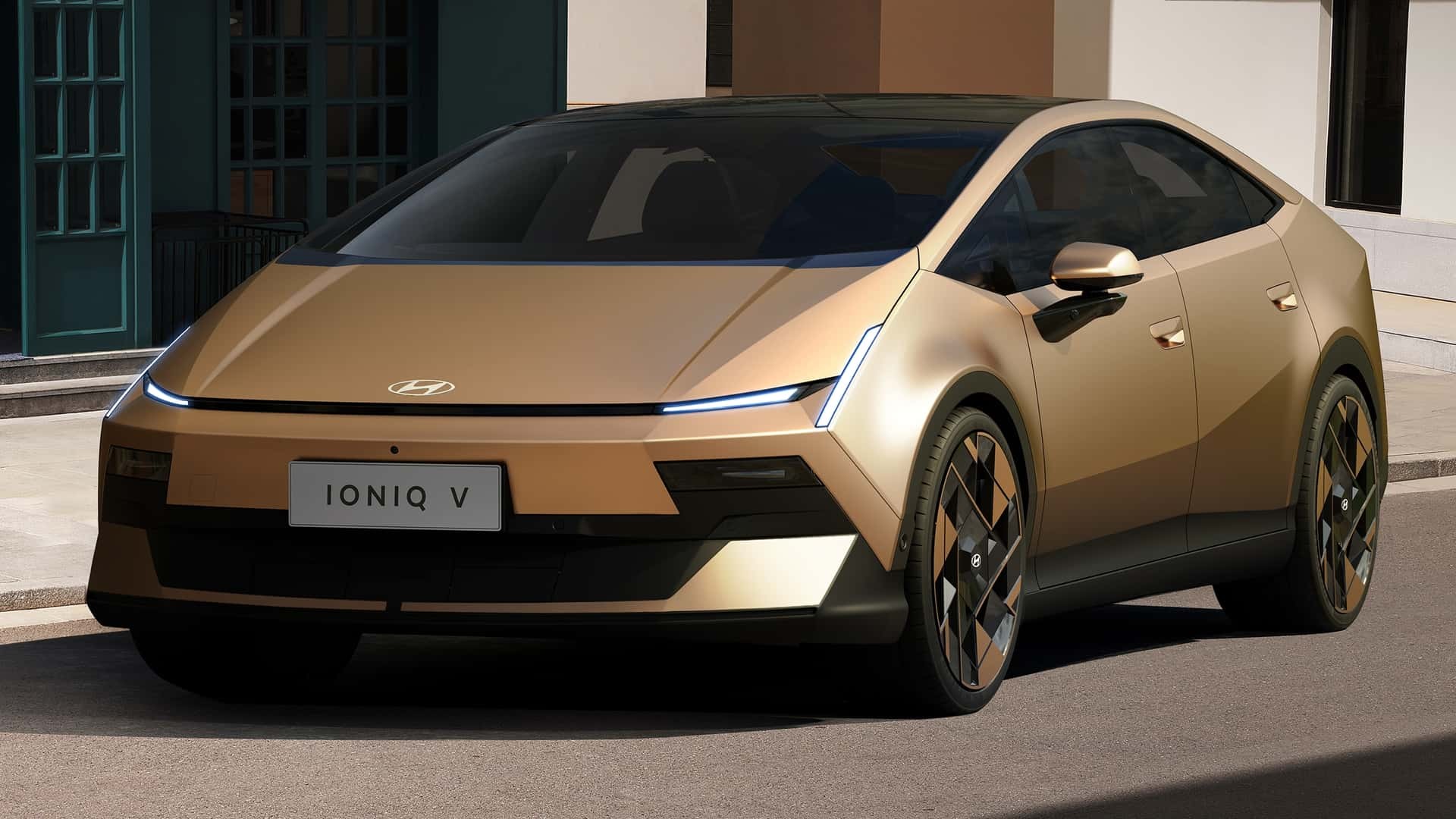
At the 2026 Beijing Motor Show, Hyundai officially introduced the Ioniq V, a sharp-edged electric sedan that marks a significant shift in the company’s regional strategy. While it shares a name with the global Ioniq 5 SUV, the Ioniq V is a distinct, dedicated model designed specifically to meet the demands of the Chinese market.
A New Design Language: “The Origin”
Moving away from the softer lines seen in its global EV lineup, the Ioniq V adopts a bold, wedge-shaped silhouette under a new design philosophy dubbed “The Origin.” The vehicle features a fastback-style sloping roofline, though it maintains the practical utility of a traditional sedan with a dedicated trunk.
Key design elements include:
– Sharp, aggressive angles and a low-profile stance.
– Frameless doors that enhance its premium, modern aesthetic.
– Extended dimensions: At 192.9 inches long, it rivals the Hyundai Sonata in size, but utilizes a dedicated electric platform to achieve a much longer wheelbase of 114.1 inches. This extra space between the axles typically translates to superior interior legroom.
High-Tech Interior and Digital Cockpit
Reflecting the tech-heavy preferences of Chinese consumers, the Ioniq V interior is characterized by a “digital-first” approach. Physical buttons have been largely replaced by screen real estate:
– Massive 27-inch 4K touchscreen: This display spans the dashboard, allowing both the driver and the front passenger to interact with the vehicle’s systems.
– Minimalist Driver Interface: Instead of a traditional instrument cluster behind the steering wheel, Hyundai relies on a sophisticated Head-Up Display (HUD) to provide essential driving information.
Performance and Range Expectations
While full technical specifications remain under wraps, Hyundai has confirmed that the long-range version of the Ioniq V will offer a range of over 373 miles (600 km).
Note on Range: It is important to view this figure with context. The range is based on the CLTC (China Light-Duty Vehicle Test Cycle), which is known to be more optimistic than the more stringent EPA (US) or WLTP (Europe) standards. Actual real-world mileage may vary depending on driving conditions.
The Broader Strategy: A Multi-Model Offensive
The Ioniq V is not an isolated project; it is the first step in a massive expansion plan. Hyundai aims to launch 20 new models in China over the next five years, with the goal of reaching 500,000 annual sales by 2031.
The roadmap includes:
– Early 2027: An SUV based on the “Earth” concept.
– Diversified Powertrains: A mix of pure EVs and models featuring range-extending combustion engines to mitigate range anxiety.
– Heavy Investment: Through its Beijing Hyundai joint venture with BAIC, the company is investing approximately $1.1 billion (8 billion yuan) to remain competitive.
Why This Matters
For years, traditional automakers like Hyundai have faced intense pressure in China from domestic brands that move faster and price their vehicles more aggressively. The Ioniq V represents Hyundai’s attempt to pivot from a “global one-size-fits-all” approach to a localized strategy. By developing models specifically for Chinese tastes—emphasizing high-tech interiors and rapid product cycles—Hyundai is attempting to reclaim its footing in the world’s most competitive EV market.
Conclusion
The Ioniq V is a clear signal that Hyundai is prioritizing regional customization to combat rising domestic competition in China. While this specific model is unlikely to reach Western markets, it serves as the cornerstone of a massive, multi-billion dollar effort to dominate the Chinese electric vehicle landscape.