



At the turn of the millennium, a specific automotive subculture was reaching a fever pitch. Driven by a generation of drivers who grew up on reliable commuters like the Honda Accord but craved the adrenaline of a V8, the aftermarket tuning scene exploded. From the aisles of SEMA in Las Vegas to local street corners, the trend was clear: take a small, efficient four-cylinder engine and make it fast.
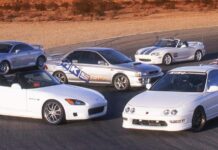
To understand the reality of this movement, Car and Driver attempted an ambitious three-day test of high-performance tuner cars. The goal was to see if these modified machines could balance raw speed with mechanical reliability.
The mission, however, proved as volatile as the engines themselves. Of the ten cars invited, six arrived, and only four survived the gauntlet of desert sandstorms, mechanical failures, and high-speed stress tests.
The Challenge of Tuning: Speed vs. Fragility
The central tension in the tuning world is the trade-off between performance and durability. When you push a small engine to produce significantly more power through turbocharging or high-RPM modifications, you often void warranties and invite mechanical fragility.
The testing process highlighted this reality through several failures:
– The Vortech Honda Civic Si suffered a burnt piston during top-speed runs due to insufficient fuel flow.
– The HKS Subaru Impreza experienced a sudden loss of power on the final day, attributed to a mass-air sensor failure.
– The Borla Ford Focus suffered a computer malfunction before the test even began.
Despite these setbacks, the surviving cars provided a profound look at what is possible when enthusiast engineering meets production platforms.
The Contenders: A Survey of Performance
HKS Impreza 2.5RS Turbo
The Rally-Inspired Powerhouse
HKS attempted to bring the spirit of the World Rally Championship (WRC) to the street by bolting a T-25 turbocharger system to the Subaru Impreza. This wasn’t just a bolt-on job; it involved an intricate web of intercoolers, auxiliary injectors, and complex plumbing costing over $7,600 in parts and labor alone.
- The Experience: When it worked, the Impreza was a revelation. The turbocharger provided progressive throttle response with minimal lag, and the all-wheel-drive system kept the car composed on winding mountain roads.
- Performance: On the oval, it reached a top speed of 135 mph, roughly 8 mph faster than the stock model.
- The Verdict: While it flirted with reliability issues (specifically regarding the mass-air sensor), the HKS Impreza proved that a well-executed turbo setup can transform a standard sedan into a legitimate performance machine.
King Motorsports/Mugen Integra Type R
The Precision Instrument
If the HKS Subaru was about brute force and rally grit, the King Motorsports Integra was about surgical precision. Utilizing parts from Mugen—the legendary tuner closely tied to Honda—this build focused on maximizing the engine’s ability to breathe and rev.
- The Engineering: By installing new valve springs and a Mugen engine computer, the team pushed the redline to a staggering 9,000 rpm. The engine was further optimized with a Mugen header, muffler, and a specialized limited-slip differential.
- The Experience: The transformation was total. The engine note, once frenetic, was refined into something reminiscent of a Ferrari. The car’s handling was tuned to “rotate” through corners, reducing the typical understeer found in front-wheel-drive cars.
- Performance: It reached 60 mph in just 5.8 seconds, nearly a full second faster than the stock version.
- The Verdict: This is a masterclass in tuning. It successfully bridged the gap between a “boy-racer” commuter and a sophisticated track weapon, offering a balance of usability and extreme performance.
Final Thoughts
The tuner movement represents a unique era of automotive customization where enthusiasts sought to extract maximum potential from modest platforms. While the testing revealed that high-performance modifications often come at the cost of reliability, the results from King Motorsports and HKS proved that with enough engineering expertise, a small car can indeed rival much more expensive machinery.
Conclusion: The test demonstrated that while aftermarket tuning can turn everyday cars into high-performance machines, the thin line between “enhanced” and “unreliable” remains the primary challenge for the enthusiast.