



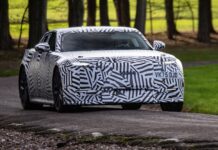

Audi has publicly conceded that its recent overhaul of vehicle naming conventions was misguided and is now reversing course. The German automaker initially sought to create a clearer distinction between combustion-engine and electric models by assigning odd numbers to ICE vehicles and even numbers to EVs. This led to the A4 being rebadged as the A5 in 2024, but the plan has been abandoned, with Audi admitting the confusion it caused outweighed any perceived benefit.
The Failed Experiment
The initial strategy mirrored Mercedes-Benz’s “EQ” sub-brand for EVs, but Audi’s approach proved more disruptive. The change was particularly noticeable with the A4/A5 transition, and though the A6 was spared from becoming an A7, the experiment created significant confusion among customers. Notably, the E-Tron was rebranded as the Q8 E-Tron during a facelift, a change that failed to boost sales before the model’s eventual discontinuation.
Return to Tradition
CEO Gernot Döllner has openly stated that reinstating the A4 badge is “thinkable,” suggesting a potential return to the original nomenclature. While the upcoming electric A4 will still be labeled the A4 E-Tron, the move signals a broader shift back to the traditional naming system. Audi’s previous attempt at a power-output-based numbering scheme (using numbers like 25 for 80 kW, 30 for 81–96 kW, and so on) was also scrapped after widespread criticism for being unintuitive.
The China Complication
Further complicating matters, Audi launched a separate, all-electric brand in China called AUDI (spelled in all caps and without the iconic Four Rings logo). This parallel strategy adds another layer of confusion for global consumers. However, the core Audi brand is undergoing significant changes, including the upcoming next-generation Q7 in 2026 and a potential revival of the A2 nameplate for an entry-level EV.
Lessons Learned
Audi’s reversal highlights the importance of brand consistency and customer clarity. While innovation is important, forcing unnecessary changes on consumers can backfire. The automaker’s willingness to admit its mistake is a rare but welcome move in an industry often resistant to acknowledging flawed strategies.
“We all make mistakes, and it’s refreshing to see an automaker acknowledge and own up to one,” as one industry analyst noted. Adding an “E-Tron” suffix from the start would have avoided this whole mess.