


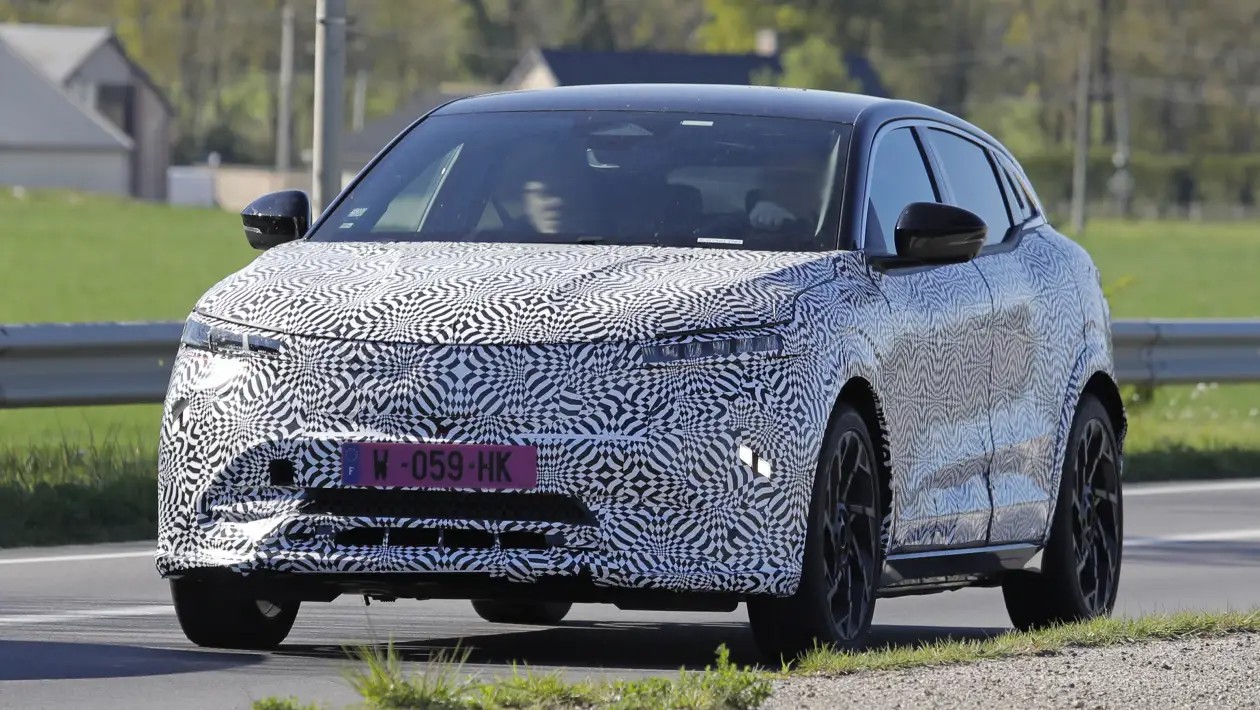
The Renault Megane E-Tech is entering a critical phase of its lifecycle. Recent sightings of camouflaged prototypes undergoing testing suggest that Renault is preparing a significant mid-life refresh designed to maintain the model’s edge in an increasingly crowded electric vehicle (EV) market.
This update is not merely cosmetic; it represents a strategic move to address the core requirements of modern EV buyers: increased range, improved efficiency, and sharper design.
A Fresh Visual Identity
While the overall proportions of the Megane E-Tech will remain largely unchanged, the prototype reveals several key aesthetic refinements aimed at aligning the model with Renault’s latest design language:
- Revised Front Fascia: The bonnet now features a straight edge across the front, which will likely allow the Renault diamond badge to sit lower on the nose.
- Updated Lighting Signature: While the main headlight units may remain similar, the daytime running lights (DRLs) appear to be moving lower into the bumper, adopting the distinctive half-diamond shape seen on the new Renault Clio.
- Rear Refinements: The rear lights are expected to feature more three-dimensional elements within thinner housings, complemented by redesigned lower bumpers and new wheel designs.
- Trim Options: A sportier Esprit Alpine trim is expected to be part of the launch lineup, catering to drivers seeking a more performance-oriented aesthetic.
The Battery Breakthrough: LFP and “Cell-to-Pack” Technology
The most significant upgrades are happening beneath the vehicle’s surface. Renault is shifting its battery strategy to balance cost-efficiency with performance.
Currently, the Megane utilizes a 60kWh Nickel Manganese Cobalt (NMC) battery. The upcoming version is expected to transition to Lithium Iron Phosphate (LFP) cells. While LFP batteries generally offer lower energy density than NMC, Renault intends to offset this through a “cell-to-pack” architecture.
By eliminating the heavy structural modules typically used to house battery cells, Renault can pack more cells into the same physical footprint. This reduces weight and cost while maximizing capacity.
This technical shift is vital. If successful, it could push the Megane E-Tech’s range toward the 300-mile mark, a crucial psychological and practical threshold for many electric car adopters.
Navigating a Competitive Landscape
This refresh is a defensive and offensive necessity. As Bruno Vanel, Renault’s product development chief, noted, the Megane holds a unique position as the brand’s only low-riding C-segment hatchback. However, it faces intensifying competition from several directions:
- Volkswagen ID.3 Neo: A major player in the electric hatchback segment.
- Cupra Born: Targeting the more enthusiast-driven, sporty demographic.
- Nissan Leaf: A long-standing veteran of the EV market receiving its own updates.
By upgrading the battery technology and design, Renault is attempting to ensure the Megane remains a top contender in the highly competitive European hatchback market.
Timeline and Outlook
The updated Renault Megane E-Tech is expected to be officially unveiled in the spring, with sales expected to begin in the UK later in the year. This update is part of a broader wave of Renault electrification, which includes the upcoming Renault 5 Turbo 3e and a new Twingo.
The Megane E-Tech update marks Renault’s attempt to bridge the gap between affordability and high-range performance, ensuring the model remains a viable alternative in a rapidly evolving electric market.


