




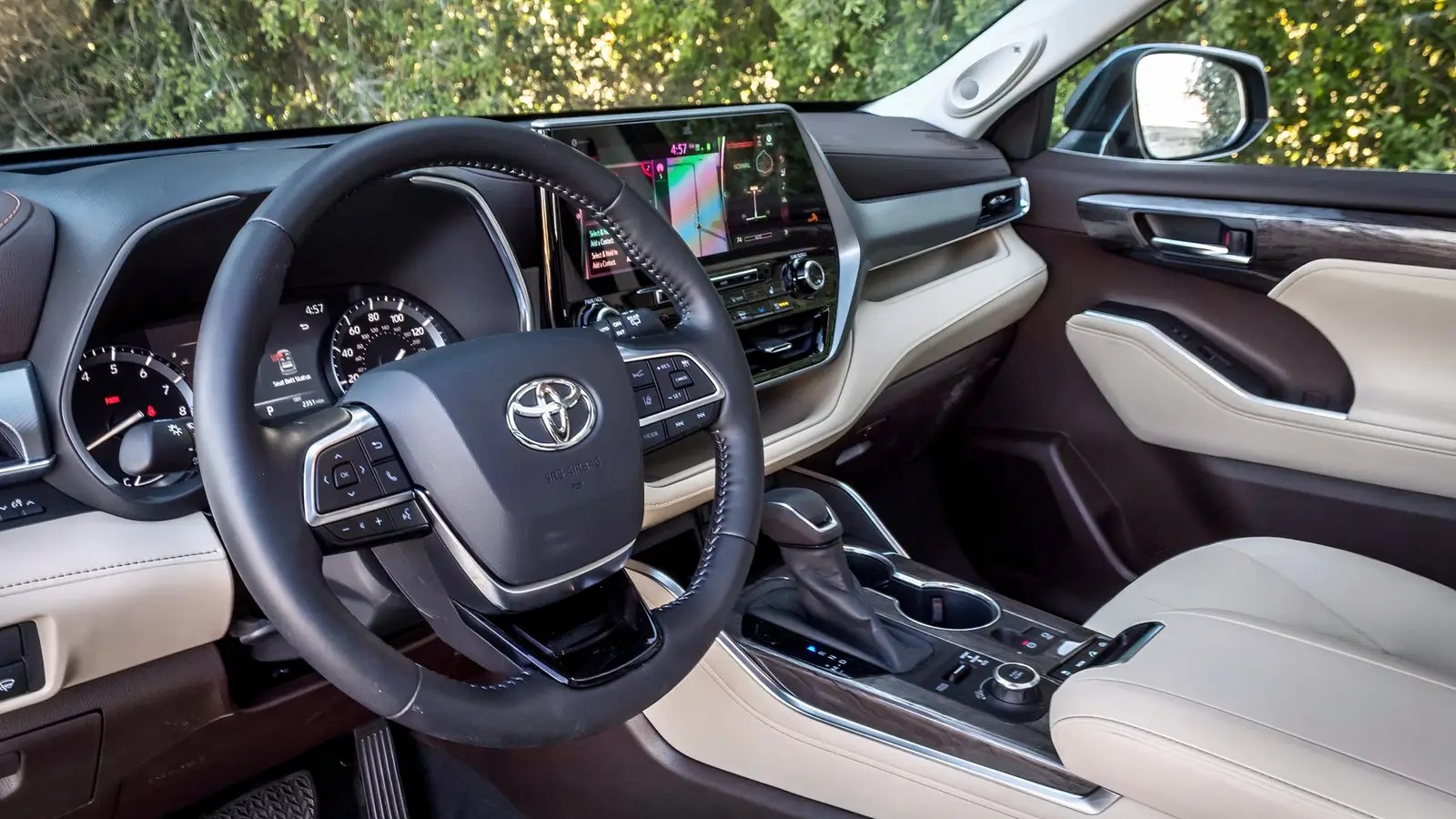
Luxury isn’t locked behind six-figure badges anymore. The line has blurred. You want quiet? You want quilted leather? You don’t necessarily need an Acura, Lincoln, or Infiniti to get it.
The biggest surprise in today’s SUV market isn’t how fast cars go. It’s how mainstream models—specifically top-trim hybrids—are stealing the show from their premium siblings. And nowhere is this more obvious than in the 2026 Toyota Highlander Hybrid Premium.
Why Top Trim SUVs Now Feel Like Luxury
Let’s be clear. A base model Highlander feels like a base model. Cloth seats. Basic adjustments. It gets you there. But jump to the Platinum trim, and something shifts. The noise goes away. The materials feel expensive. You’re not just commuting; you’re gliding.
Why? Because automakers share platforms. They share parts. The difference between a Toyota and its luxury cousin is often marketing and a handful of specific options. Once you max out a mainstream SUV, you’re getting 95% of the luxury experience for a fraction of the price.
Features that used to cost extra? They’re standard on top trims now.
* Quilted leather
* Acoustic glass
* Panoramic roofs
* Premium audio systems
You might think you’re settling. You’re actually getting more vehicle for your money. The ride comfort improves. The tech modernizes. And with the push toward hybridization, the distinction between “regular” and “premium” starts to vanish.
“Ownership costs should be much more affordable… even for luxury-branded vehicles.”
But is there still a point in paying the badge premium? Let’s look at the specs.
How The 2026 Highlanders Hybrid Platinum Compares To The Lexus RX
This is the heart of the argument. The Highlander and the Lexus RX sit on the same DNA. Specifically, the TNGA-K platform. This shared engineering foundation is what allows the Highlander to punch above its weight class.
When you drive the 2026 Highlander, you feel that Lexus refinement. It’s quiet. It’s composed. The suspension isolates bumps without feeling disconnected. The Platinum trim adds:
* Adaptive headlights that swivel with the steering
* A digital rearview mirror
* Heated second-row seats
* A head-up display
* 360-degree camera surround
All for an MSRP of $55,675.
Now look at the Lexus RX350h. It’s the closest Lexus rival. It makes 246 hp (slightly more than the Highlander’s 243 hp) but starts around $62,000+ for comparable trims. The gap widens quickly.
Shared Engineering Means Shared Reliability
You aren’t just buying space. You’re buying a powertrain proven in Lexus applications. The 2.5-liter inline-4 and three electric motors aren’t experimental tech. They’re refined. Toyota backs the hybrid battery with a 10-year, 150,000-mile warranty. Most competitors stick to 8 years.
Is it identical to the RX? No. The powertrain is slightly different. The RX 3.5h uses a different setup. But the result—the driving feel, the smooth EV-first launch, the regen braking—is remarkably similar.
Why Choose Highlander Hybrid Platinum Over Lexus
Here’s where the rubber meets the road. You can get the luxury feel or the practicality. The Highlander Hybrid Platinum does both, but with a twist: three rows.
The Lexus RX is a five-seater. The Highlander holds seven.
Think about your actual needs.
1. Do you need seven seats every day? Maybe not.
2. Do you want the ability to seat seven guests when the cousins visit? Probably yes.
3. Is the second row spacious? Yes. The Highlander offers 39.4 inches of headrom and 38.7 inches of legr om. Compare that to the RX’s 38.6 and 37.4 respectively.
Wait. The Highlander is bigger?
Yes.
The seating position in the second row of the Highlander is slightly more generous than the RX. For long trips, this matters. Your legs thank you.
But you do give something up by skipping the Lexus badge.
* Material nuances: Lexus uses higher-grade leather touches and unique interior finishes that Toyota saves for its luxury division.
* Suspension tuning: Lexus often offers more sophisticated adaptive suspensions that you can tweak more precisely.
* Dealership experience: Lexus retail is generally more service-oriented and premium in feel compared to busy Toyota lots.
* Plug-in options: The Lexus RX 450h+ is a PHEV. The Highlander isn’t. If plug-ins matter, the RX wins.
However, if your priority is interior volume without compromising on refinement, the Platinum Highlander wins by a mile.
Does Hybrid Efficiency Really Pay Off
Math is simple.
The 2026 Toyota Highlanders Hybrid Platinum returns an EPA-estimated 35 city / 35 highway MPG. Annual fuel costs are estimated at $1,800.
Now compare it to its competitors in the same three-row segment.
Take the 2025 Nissan Pathfinder.
* V6 naturally aspirated
* 21 city / 27 highway MPG
* Estimated annual fuel cost: $2,700
Take the 2023 Volkswagen Atlas with its turbo-four.
* Estimated annual fuel cost: $2,700
That’s a $900 savings every year just on gas. Over five years, you save nearly $4,500 at the pump. Add maintenance. Toyota’s reputation for long-term durability means lower repair bills down the line. The hybrid system pays for the vehicle faster.
The Verdict On Skipping The Lexus Badge
Is the Lexus RX worth the premium? The highest trim RX450h Luxury costs $73,315. The Highlander Platinum is $55,675. That is a $17,640 gap.
For what?
Two less seats. Slightly nicer stitching. A different badge on the hood.
The 2026 Highland Hybrid Premium is a compelling compromise. It’s not the “budget” option. It’s a deliberate choice for efficiency seekers who refuse to compromise on comfort.
It delivers a cabin so quiet you forget you’re in a family hauler. The infotainment works smoothly. The ride is soft. And you drive it home for nearly $18k less than its Lexus cousin.
Why pay more when you already have what matters? The luxury isn’t in the logo. It’s in the ride. It’s in the savings. It’s in having empty seats instead of a heavier mortgage payment.