
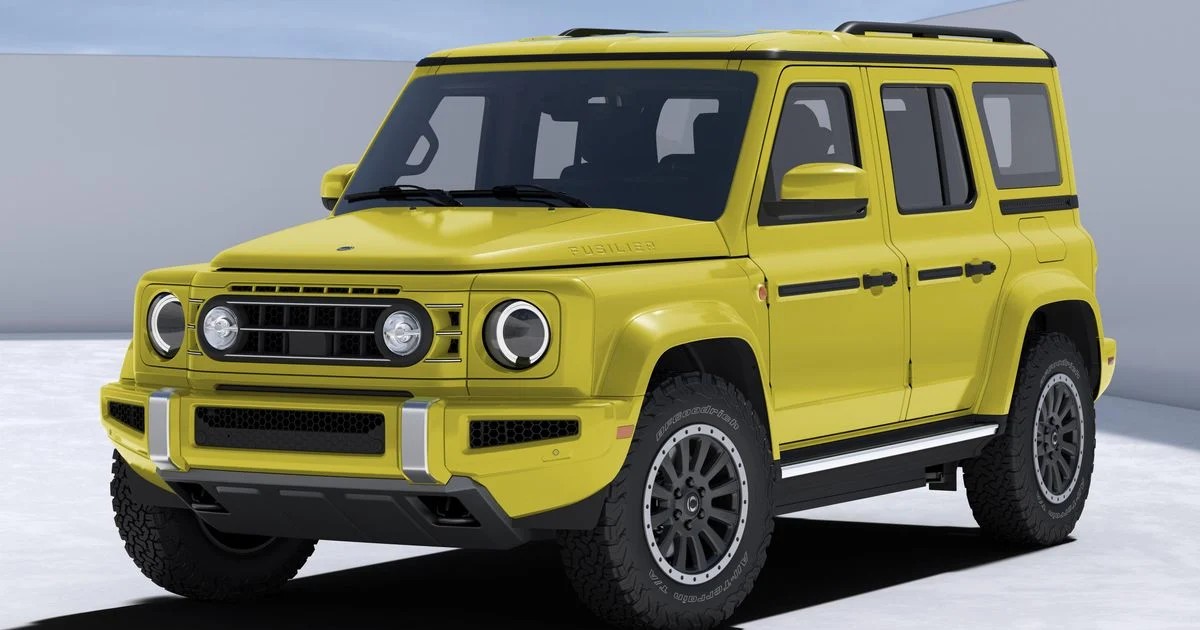
Ineos Automotive has officially confirmed a fundamental shift in its product development strategy. The British automaker will no longer design and build new vehicle models from scratch, a departure from the approach used for its flagship Grenadier. Instead, the company will rely on technology partnerships to accelerate the release of future vehicles, including the upcoming Fusilier SUV.
This strategic pivot aims to reduce development costs and speed up time-to-market in an increasingly competitive and complex automotive landscape.
The End of “From Scratch” Development
Lynn Calder, CEO of Ineos Automotive, clarified the company’s new direction in an interview with Autocar. While the Grenadier was engineered entirely in-house on a bespoke ladder-frame platform, future models will leverage existing architectures from partner manufacturers.
“We’re not building any other cars from the ground up, like we have with the Grenadier,” Calder stated. “Now for us, it is about technology sharing, and once we have got that set, we will be able to bring more models to market in shorter order.”
This decision rules out the creation of derivatives based on the current Grenadier platform. Customers should not expect a short-wheelbase version of the Grenadier or other variations of its current chassis. Instead, Ineos is focusing on introducing entirely new body styles and sizes by adopting proven external technologies.
The Fusilier and the iCaur Connection
The immediate beneficiary of this strategy is the Fusilier, a smaller SUV designed to slot below the Grenadier in Ineos’ lineup. Originally unveiled as a concept in February 2024, the Fusilier was initially expected to launch in 2027. However, the project was paused indefinitely in July 2024 due to market uncertainty surrounding electric vehicle (EV) adoption and regulatory tariffs.
Current reports indicate the Fusilier is now targeted for a 2028 launch, followed by two additional models.
Although Ineos has not officially confirmed its partners, strong evidence points to a collaboration with Chery’s off-road sub-brand, iCaur. Key indicators include:
- Technology Match: The Fusilier concept featured a “skateboard” platform compatible with both pure electric and Extended-Range Electric Vehicle (EREV) powertrains. This aligns perfectly with iCaur’s V27, which uses a petrol engine solely as a generator to power electric motors driving the wheels.
- Market Timing: iCaur is expected to enter the Australian market in early 2027, suggesting a synchronized global rollout strategy.
- Global Compatibility: iCaur vehicles are engineered for both left-hand and right-hand drive markets, facilitating Ineos’ expansion into regions like Australia and the UK.
The iCaur V27, a flagship model measuring over five meters long, offers robust off-road capabilities with turbocharged 1.5-liter engines paired with single or dual electric motors. This technology provides the torque and control essential for off-roading, while mitigating range anxiety through its hybrid nature.
Why This Matters: Speed, Cost, and Market Reality
Ineos’ decision to partner rather than build reflects broader trends in the automotive industry. Developing a new vehicle platform from scratch can take five to seven years and cost billions of dollars. By adopting existing architectures, Ineos can:
- Reduce Development Time: Fast-track the release of new models to keep pace with market demands.
- Lower Costs: Minimize R&D expenses, allowing for more competitive pricing.
- Mitigate Risk: Leverage proven technologies from established manufacturers, reducing the technical risks associated with new powertrains.
This strategy also addresses the challenges Ineos faced after its 2022 launch. Despite delivering 35,000 vehicles globally, the company has encountered significant hurdles, including:
- Supply Chain Disruptions: Early production issues linked to suppliers like Recaro.
- Tariff Barriers: Higher tariffs on French-built SUVs in the US, which accounts for approximately 65% of Grenadier sales.
- Consumer Hesitancy: Slower-than-expected adoption of pure EVs in key markets, prompting the shift toward EREV technology.
A New Chapter for Ineos Automotive
Ineos Automotive’s regional director for Australia, New Zealand, and APAC, Justin Hocevar, acknowledged the previous missteps but expressed confidence in the revised plan. “We had to pause that project; we were charging into it too quickly,” Hocevar explained. “Now that we’ve had a bit of time, we’ve got a better understanding of what we think is happening with a lot of markets around the world and the available technology to us.”
The company remains committed to its net-zero goals, emphasizing the need for long-term policy clarity and diverse technology options to meet environmental targets. By embracing partnership and flexibility, Ineos aims to balance its rugged, utilitarian brand identity with the practicalities of modern automotive manufacturing.
In summary, Ineos is transitioning from a bespoke, high-cost development model to a agile, partnership-driven approach. This shift allows the company to expand its lineup with the Fusilier and future models more quickly and efficiently, while navigating the complexities of global tariffs, supply chains, and evolving consumer preferences.